What the workflows made.
Saved images, stories, video and music, with the inputs that produced them. Viewing is free. Run your own version with your NanoGPT key and balance.
Storyboard relay
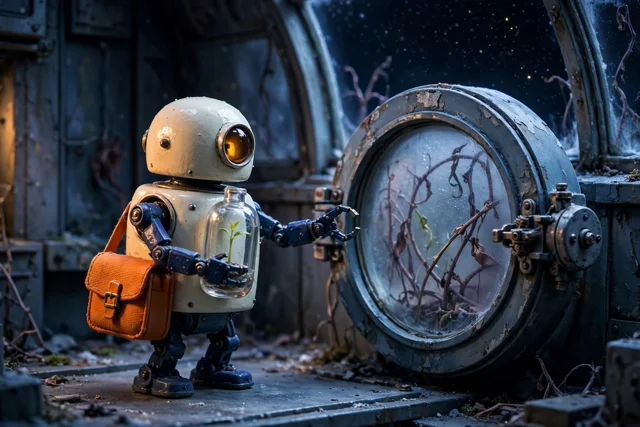
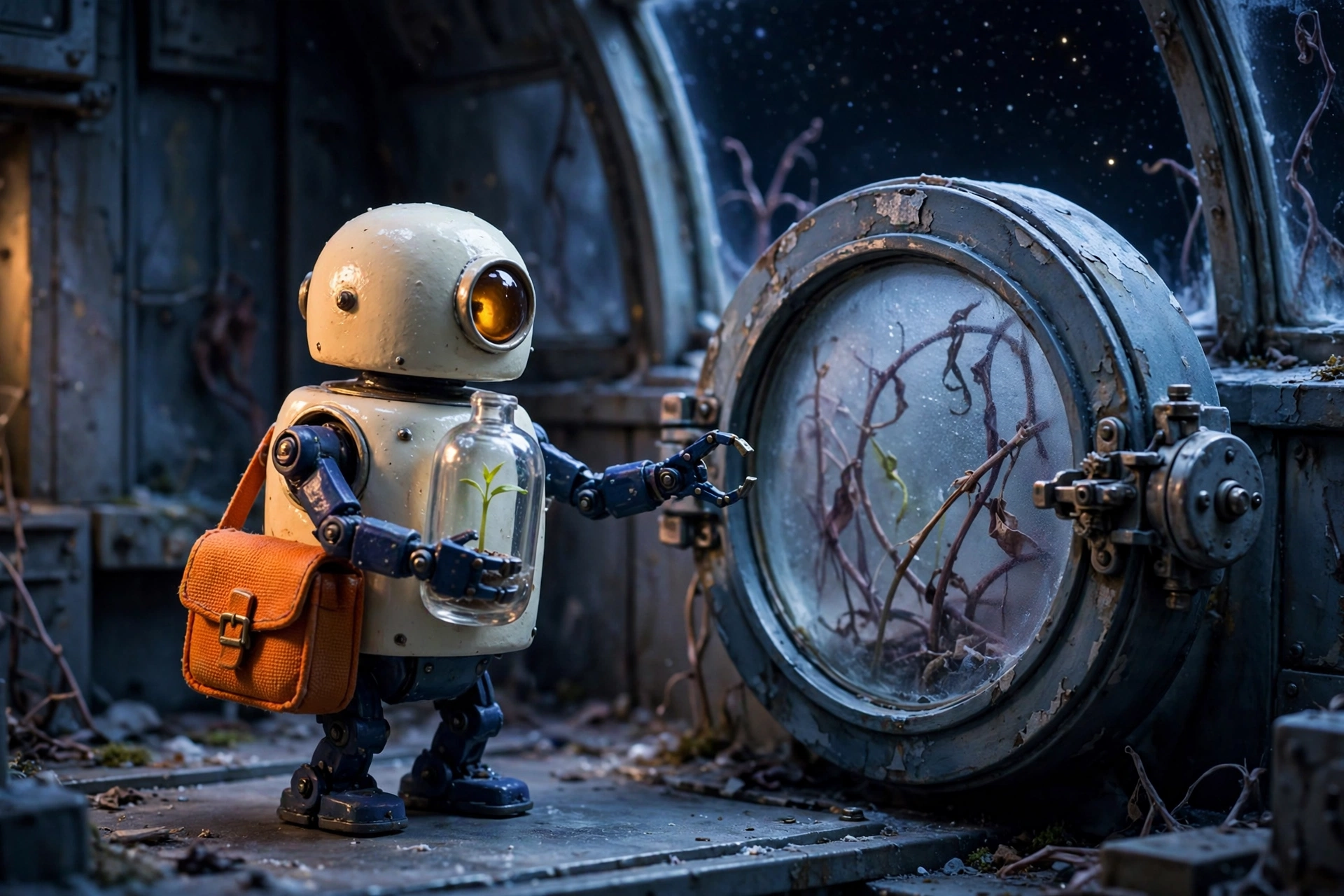
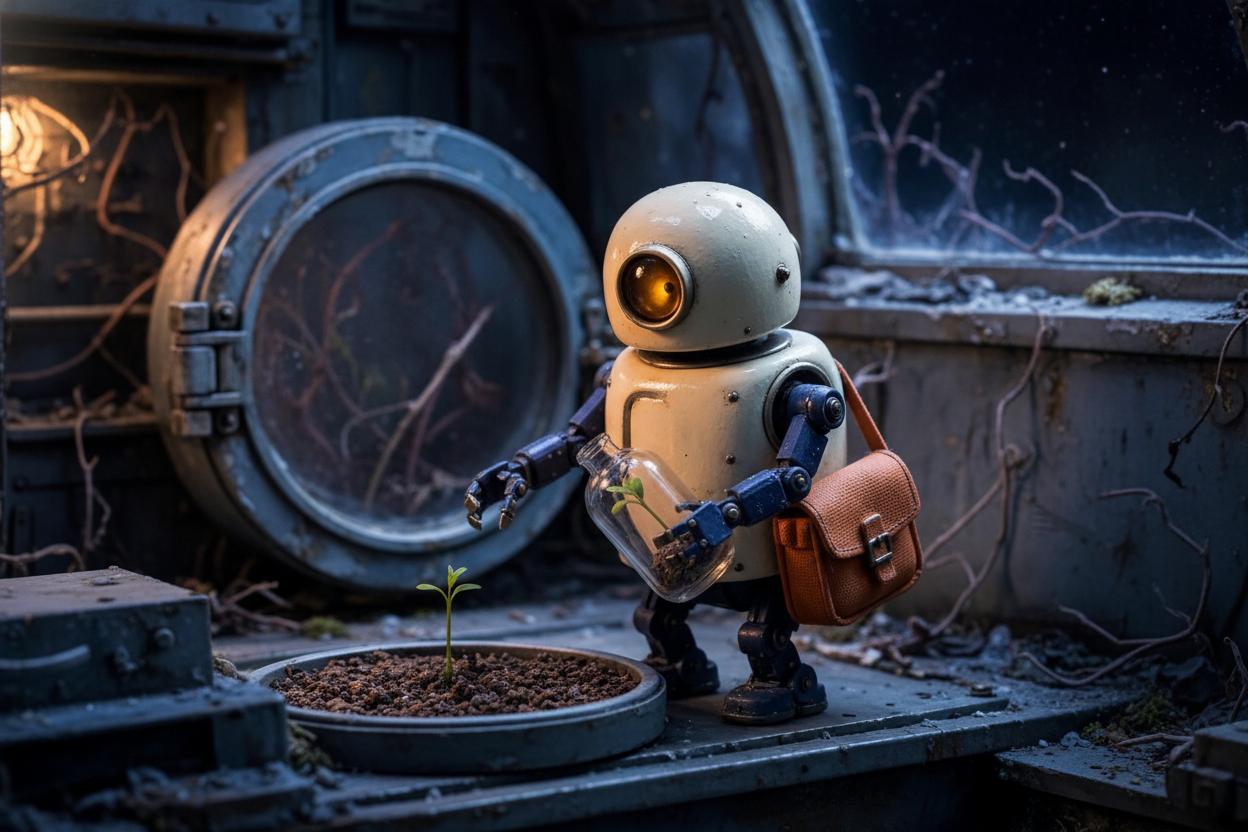
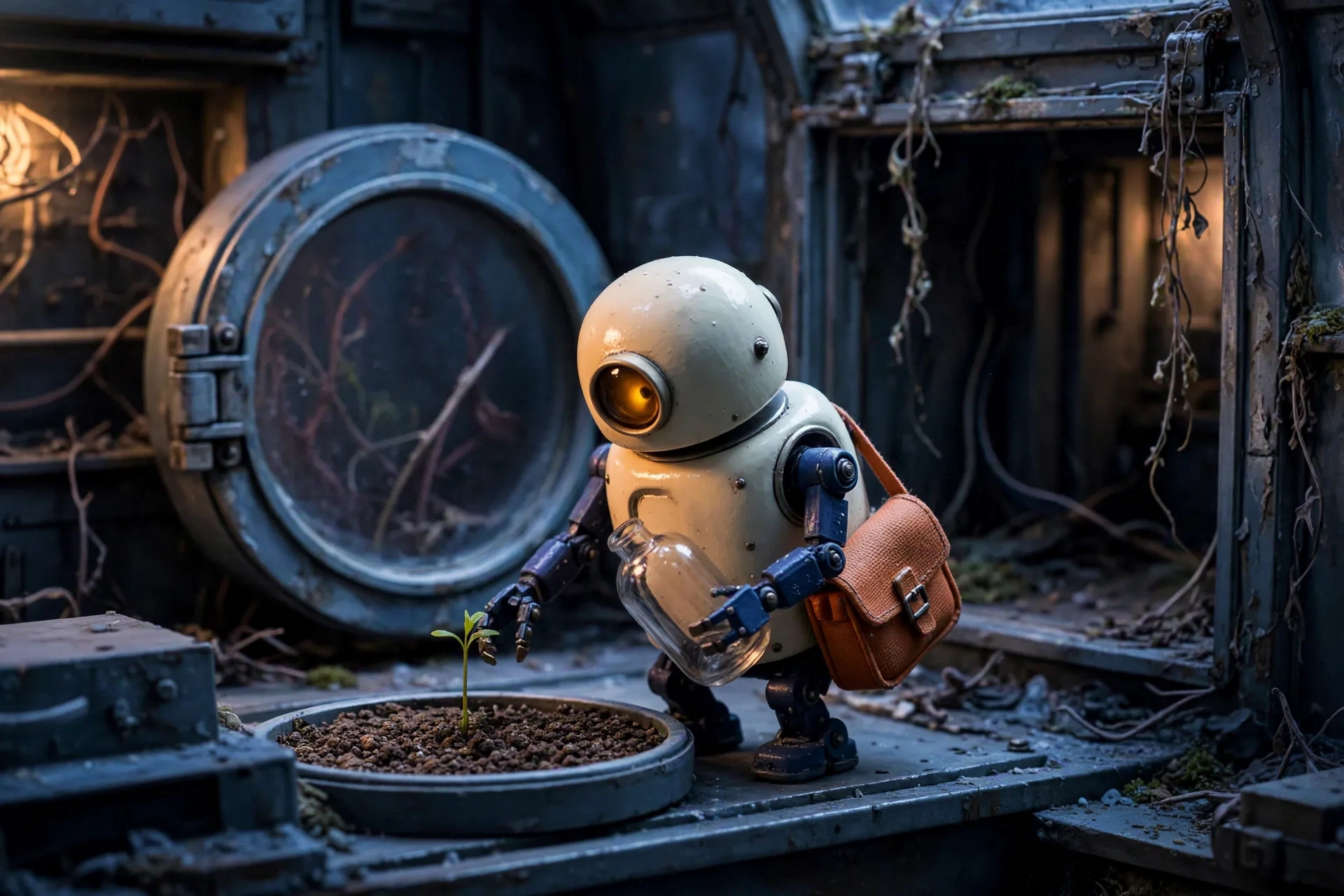
Muse establishes the postal robot. Nano Banana stages the next scene but duplicates its seedling. Gemini identifies that error; Muse Edit receives both frames and the critique, removes the duplicate plant and improves the pose. A fresh Gemini review still flags the closed hatch. This is a fixed revision demonstration with visible limits, not a guarantee of perfect continuity.
What Gemini asked the repair model to change
**Visible Story Action:** - **Frame 1:** Outside the greenhouse, the robot stands holding a sealed seedling capsule while reaching for the locked circular hatch. - **Frame 2:** The robot stands over a circular soil tray containing a planted seedling, reaching toward it with an empty gripper while holding a capsule containing a second seedling. **Mismatches:** 1. **Prop Duplication (Seedling):** Frame 1 has one seedling inside the capsule. Frame 2 shows two seedlings simultaneously—one planted in the tray and an identical duplicate still inside the glass capsule. 2. **Capsule State:** Frame 1 shows a sealed capsule. Frame 2 requires an opened, empty capsule, but it remains sealed with soil and a plant inside. 3. **Location / Hatch State:** Frame 1 shows the circular hatch closed from the exterior. Frame 2 keeps the robot in the same hallway with the circular hatch still closed, rather than inside the greenhouse with the hatch standing open behind it. 4. **Robot Pose:** The robot is upright and standing in Frame 2, rather than crouched beside the soil tray. **Smallest Specific Correction:** Remove the duplicate seedling and dirt from inside the glass capsule so it is visibly open and empty, swing open the circular hatch behind the robot to show it has entered the greenhouse, and adjust the robot into a lower crouching posture over the soil tray.
Fresh review of the repaired frame
### Story Beat Frame 1 establishes the postal robot arriving outside the locked greenhouse, seedling safely encapsulated. Frame 2 clearly conveys the next beat: the robot leans forward over a soil tray inside the compartment, having successfully transferred the seedling to the soil while clutching the empty glass jar. ### Continuity Analysis | Feature | Frame 1 | Frame 2 | Status | | :--- | :--- | :--- | :--- | | **Robot Design & Palette** | Cream enamel dome, single amber eye, blue articulated limbs, orange satchel. | Identical proportions, materials, satchel buckle, and blue/cream coloring preserved. | Consistent | | **Glass Capsule & Seedling** | Single seedling enclosed inside sealed glass jar held in right gripper. | Seedling is planted in soil tray; glass jar is held empty in right gripper. Exactly one plant/capsule visible. | Consistent (Intended state change) | | **Greenhouse Hatch** | Closed round hatch with frost/vines, locked latch on right, hinge on left. | Round hatch structure visible in background, though seemingly still closed/glazed rather than swung open. | Changed (Spatial drift) | | **Environment & Lighting** | Tactile stop-motion aesthetic, cool indigo fill with warm amber accent lighting. | Perfectly matched textures, grit, and directional practical lighting. | Consistent | ### Director's Note The character design, tactile miniature finish, and prop tracking (plant removed from jar) translated seamlessly. For absolute narrative clarity, the round hatch directly behind the robot should be visibly open/swung back into the room rather than appearing closed with its original frosted pane.
Inputs and run details
First scene
First frame of an original two-scene story. A tiny postal robot has a rounded cream enamel body, one round amber eye, short dark-blue legs, and an orange mail satchel. It carries one clear glass capsule containing a single bright-green seedling. Outside a locked circular hatch of an abandoned orbital greenhouse, the robot reaches toward the small mechanical latch beside the door with one gripper while holding the capsule securely with the other. Dormant vines are visible through frosted glass; a curved station window reveals a black starfield. Wide 3:2 medium shot with the full robot, capsule and hatch visible. Tactile stop-motion miniature photography, indigo shadows and warm amber practical light. One robot and one capsule. No lettering, captions, split screen, panel borders or watermark.
Next beat
Create the next story beat inside the greenhouse. The robot is now crouched beside a circular soil tray, carefully placing the same bright-green seedling into the soil with one gripper; its other gripper holds the opened, now-empty glass capsule. The orange satchel remains visible. The round hatch stands open behind it. Frame the planting action clearly in a new medium shot. This is a visibly different action and location within the same world, not a restyle or wider crop of the doorway scene. Retain the tactile miniature look and indigo/amber light. No lettering or extra characters.
Continuity rules
Keep the same robot's rounded cream body, single round amber eye, dark-blue legs, orange satchel and relative proportions. Track the one glass capsule and one green seedling: the closed capsule in frame 1 should be opened and empty during planting in frame 2, with no duplicate seedling or capsule. Keep the miniature materials and indigo/amber lighting recognizable. Frame 1 shows an arrival at a closed hatch; frame 2 must clearly show planting inside after the hatch opens.
Open workflow ↗How it worksDownload workflowOriginal sampled graph
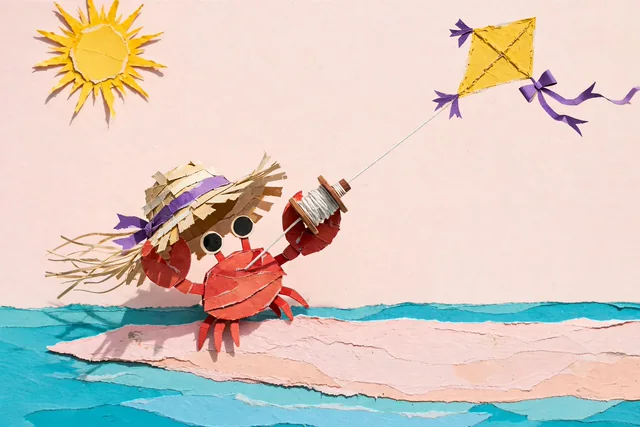 Another run: A crab catches the windSee what the same workflow made with different inputs ↓
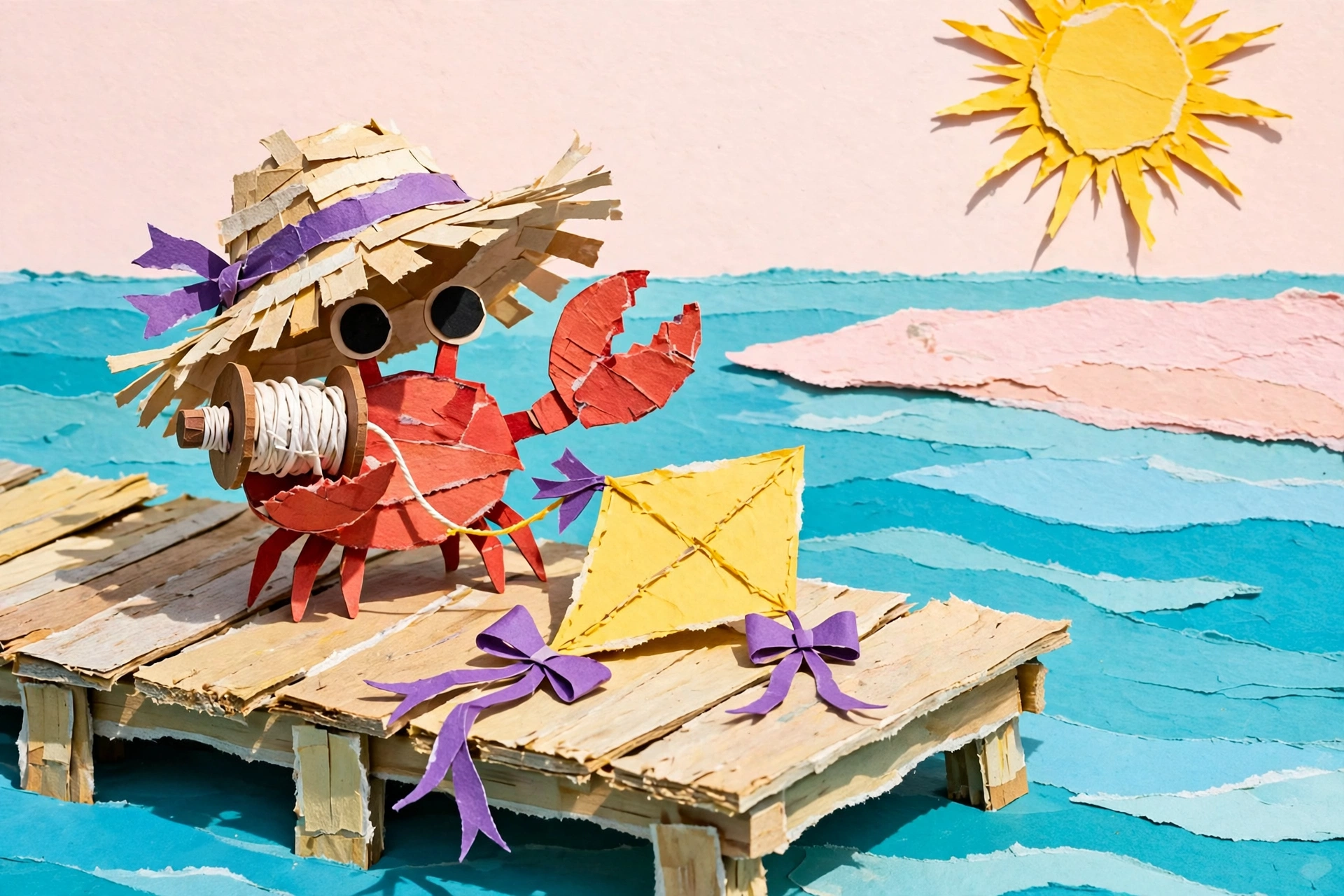
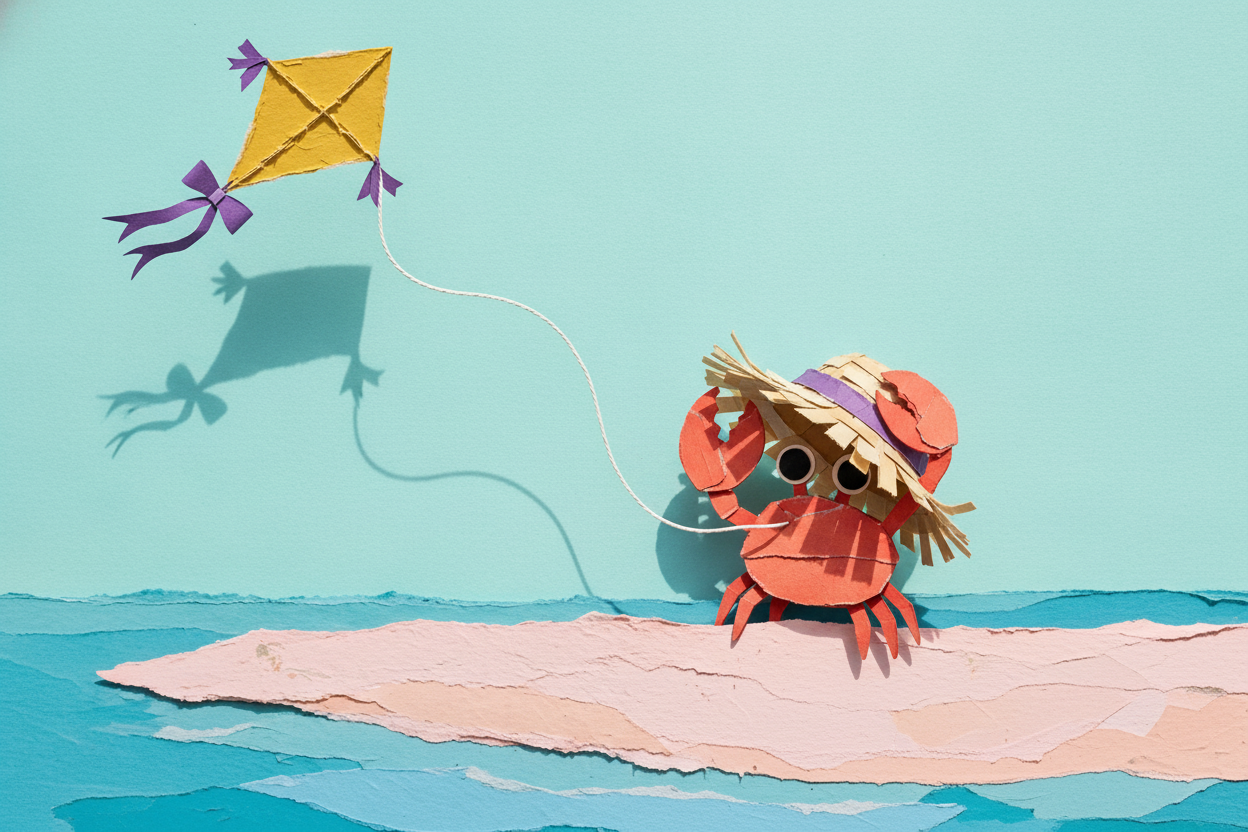
A red crab carries a yellow kite from a jetty to a pink sandbar. Muse establishes the cut-paper world; Nano Banana stages the flying action; Gemini critiques the draft; Muse Edit makes one revision from both actual frames and the critique. The repair restores the spool and pink sky, while the kite bow count and placement still fail the brief. A fresh review flags that remaining drift. The opening, draft and repaired image are retained so the improvement and its limits can be compared directly.
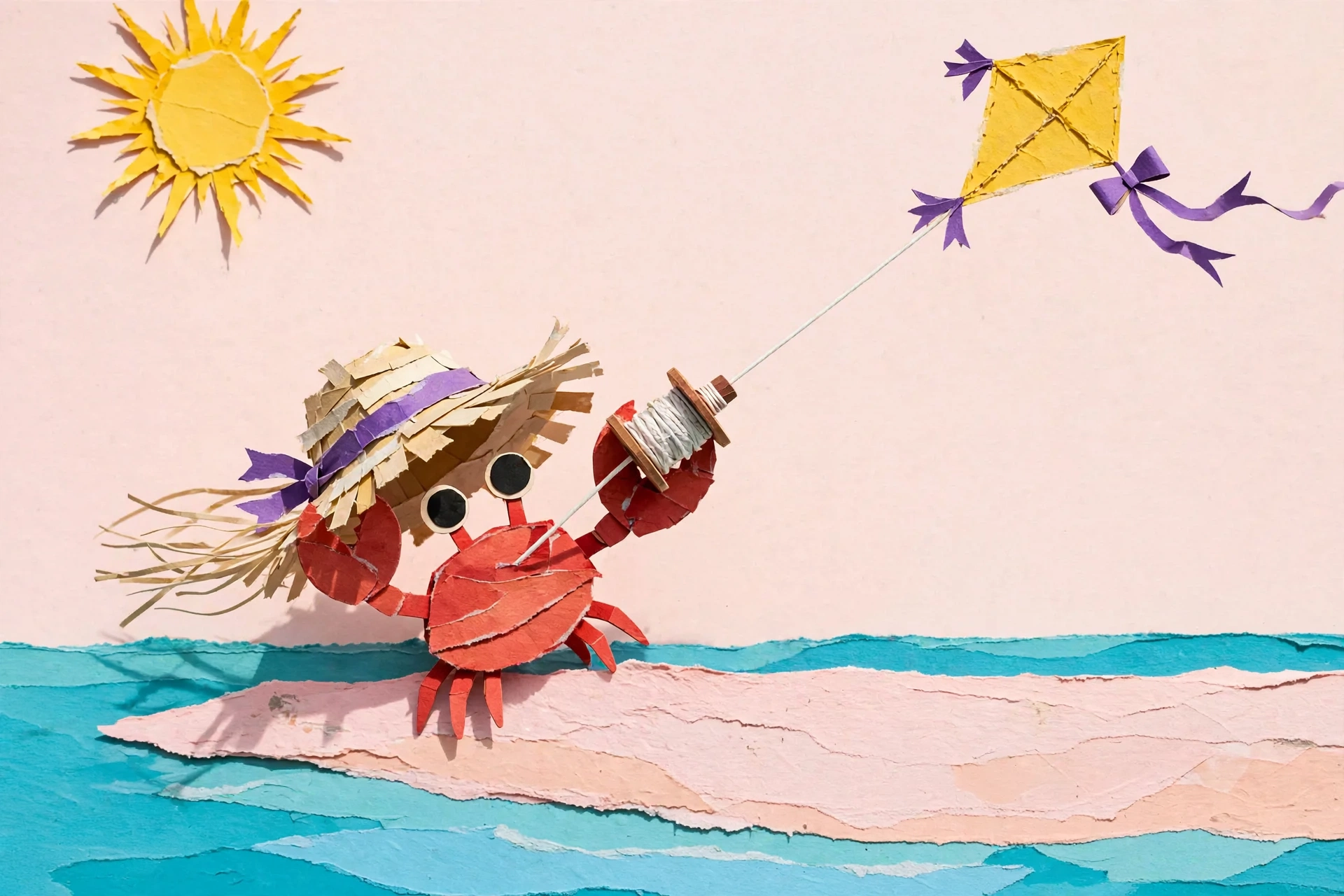
What Gemini asked the repair model to change
**Visible Story Action** - **Frame 1:** On a sunlit wooden jetty, a red crab in a straw hat holds a white string reel with one claw, standing beside a resting yellow kite with loose violet bows, gazing toward a distant pink sandbar. - **Frame 2:** Relocated to the pink sandbar, the crab flies the yellow kite in the sky, holding its hat with its left claw while the kite string leads down toward its body/right side. **Continuity Mismatches** 1. **String Reel Missing / Improper Attachment:** Frame 1 features a prominent spool reel held in the claw. In Frame 2, the reel has vanished entirely; the kite string disappears behind the crab’s body rather than connecting to a held reel. 2. **Kite Bow Count / Placement:** In Frame 1, two large violet bows lie detached (with one small purple attachment at the kite's top edge). In Frame 2, the kite has three purple bows (two at opposite side points, one on the tail ribbon) instead of exactly two tail bows. 3. **Environment/Sky Color:** Frame 1 has a pale pink sky with a yellow torn-paper sun. Frame 2 completely changes the sky to solid cyan/turquoise with no sun visible. **Smallest Specific Correction** Place the wooden string reel into the crab's raised right claw so the flying line visibly spools from it, and adjust the kite to have exactly two violet bows on its tail.
Fresh review of the repaired frame
### Story Beat Frame 1 establishes the crab on the wooden pier holding the spool, looking toward the distant sandbar with the kite resting nearby. In Frame 2, the action successfully advances: the crab relocates to the pink sandbar, holds down its straw hat against the wind with one claw, and flies the yellow diamond kite with the other via a taut white string. The new wind-blown action reads clearly. ### Continuity Table | Feature | Frame 1 | Frame 2 | Status | | :--- | :--- | :--- | :--- | | **Location / Surface** | Sun-bleached wooden jetty | Flat pink torn-paper sandbar | Consistent (intended beat change) | | **Crab Anatomy & Hat** | Red torn-paper body, 2 claws, straw hat with purple band | Same red body, claws, straw hat with purple band | Consistent | | **Kite Design & State** | Resting yellow diamond kite, purple tail accents | Flying yellow diamond kite aloft, taut string | Consistent (intended state change) | | **Spool / Hand-off** | Spool held in right claw | Spool switched to raised left claw | Changed | | **Bow Count / Tail** | 2 large violet bows unattached/nearby, small purple tip | 1 purple ribbon bow on kite tail, extra corner tassels | Changed | | **Art Style & Media** | Torn paper collage, bright pastel tones | Torn paper collage, matching paper textures/colors | Consistent | ### Director's Note The cut-paper texture, character identity, and dynamic wind motion carry over exceptionally well. For future iterations, ensure the kite tail preserves the exact count and design of the two purple ribbon bows rather than shifting to corner tassels.
Inputs for this version
First scene
First frame of an original two-scene story. A small red crab kite-maker stands on a sun-bleached wooden jetty over a shallow turquoise salt lagoon. It has two large claws, four small walking legs visible, round black eyes, and a floppy straw hat with a violet ribbon. One claw holds a wound white string reel; beside it rests a single yellow diamond kite with exactly two violet tail bows. The crab looks toward a flat pink sandbar across the water. Bold cut-paper collage, crisp torn-paper edges, coral-red, yellow, turquoise and pale pink, bright overhead sun. Wide 3:2 composition; entire crab, reel, kite and jetty visible. No robots, space stations, glass capsules, plants, text, panel borders or watermark.
Next beat
Create the next story beat on the pink sandbar across the lagoon. The same crab braces its legs and leans backward as the yellow diamond kite lifts overhead in a strong breeze. The white string visibly connects the kite to the reel in one claw; the other claw keeps the straw hat from blowing away. Exactly two violet bows remain on the kite's tail. Show the kite fully in frame and make the new wind-driven action clear. Retain the crisp cut-paper collage and sunlit coral/yellow/turquoise/pink palette. This is a new story action, not the original jetty picture with a changed background. No extra crabs or kites, lettering or panel borders.
Continuity rules
Preserve the red crab's body shape, black eyes, two claws, straw hat and violet ribbon. Keep one yellow diamond kite, two violet tail bows, and the white reel/string. The string should connect reel and kite in frame 2; the kite must be flying rather than resting. The scene moves from a wooden jetty to a pink sandbar. Preserve cut-paper materials, crisp edges and bright sunlit palette; do not inherit any robot, greenhouse or space-scene details.
Tiny world, full soundtrack
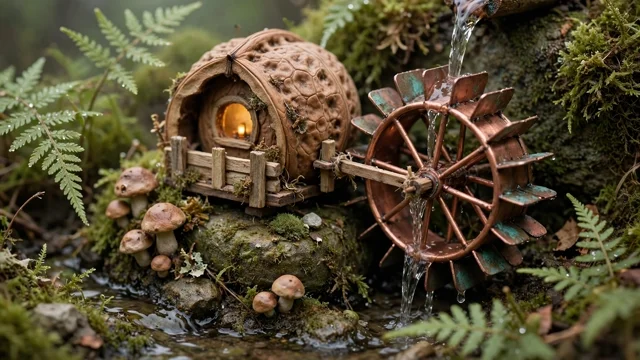
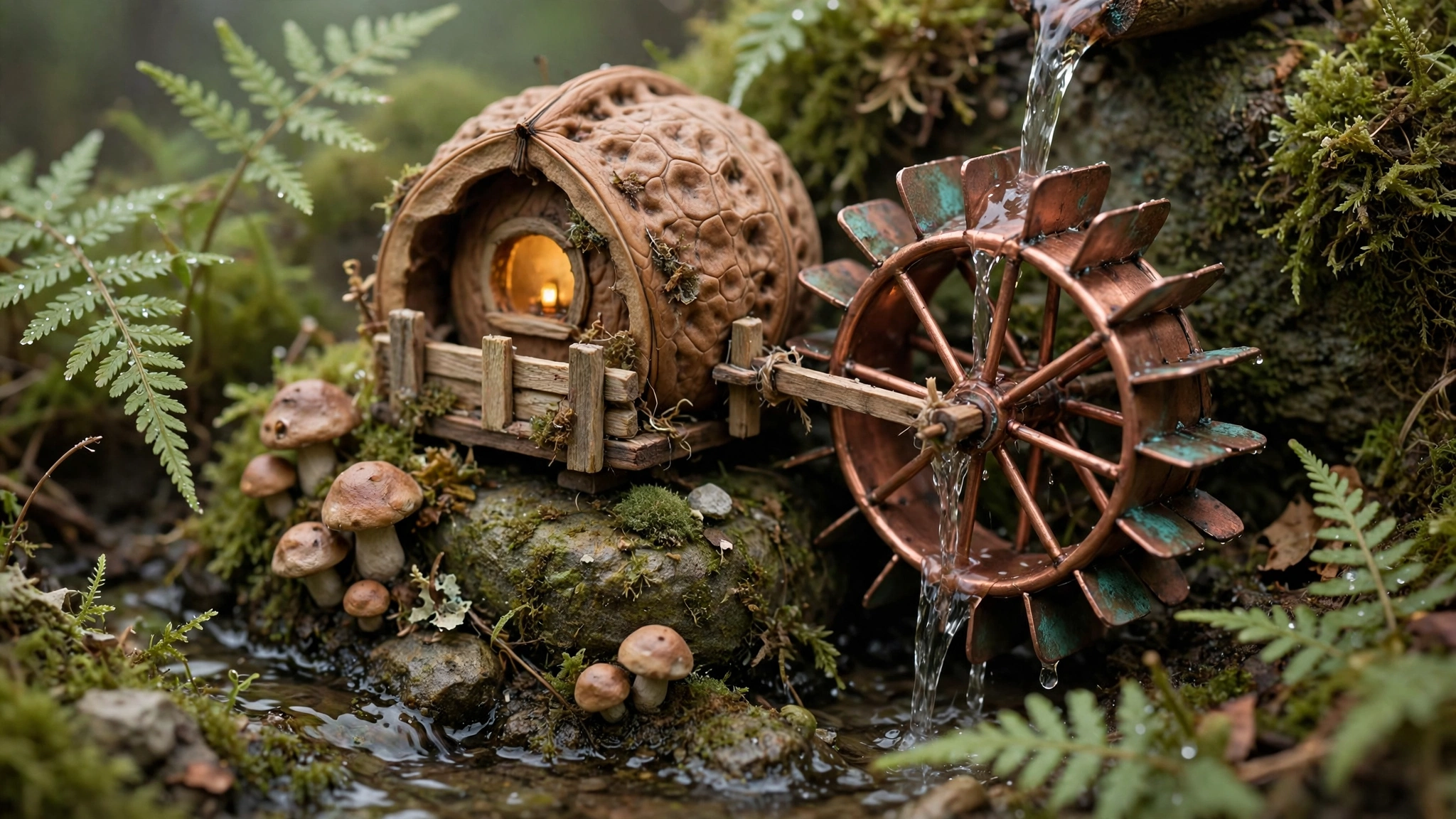
Muse builds a walnut-shell watermill; Wan animates that image; Mirelo watches the actual silent take and adds its sound. The 480p result is five seconds long. Sampled frames retain the mill and turning wheel; a separate audio model describes rushing water and faint friction, without speech or music. The audio ends sharply. Exact audiovisual sync and seamless looping were not established.
Inputs and run details
World
A handmade miniature walnut-shell watermill on a mossy stone beside a tiny stream. One large copper paddle wheel is attached to the right wall of the walnut house; a thin stream pours onto its paddles. Warm amber window, fern fronds, clay mushrooms, soft overcast morning. Tactile stop-motion set, macro lens, horizontal composition. Entire wheel visible, no people, no lettering.
Motion
One continuous locked-off macro shot. The copper waterwheel turns slowly and steadily as the stream runs over its paddles. Small ripples travel downstream. Preserve the walnut house, window, wheel and ferns from the source image. No camera travel, scene cuts, new objects or speech.
Open workflow ↗How it worksDownload workflowOriginal sampled graph
 Another run: The watchmaker’s mothSee what the same workflow made with different inputs ↓
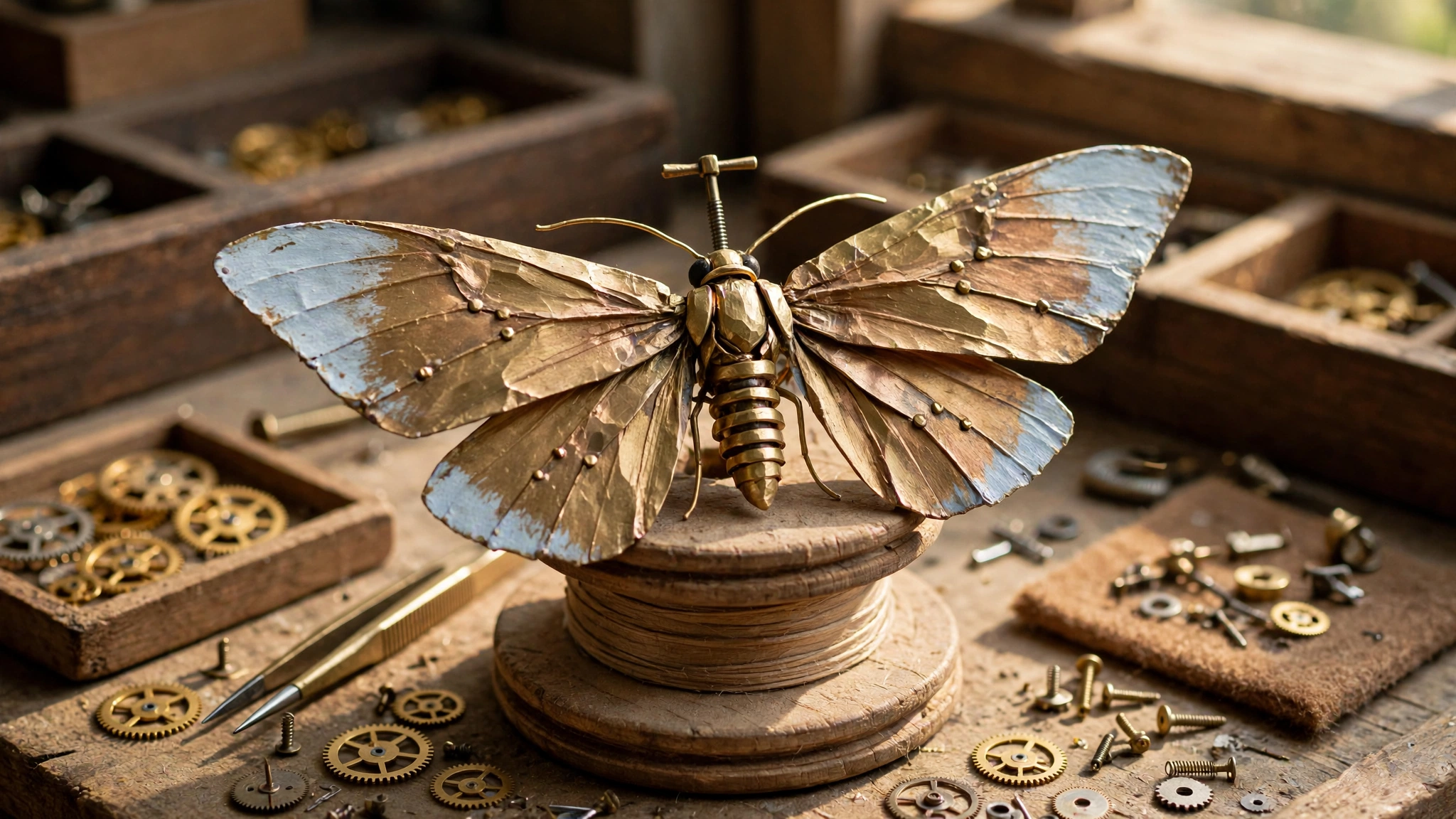
Muse creates a brass moth on a wooden spool; Wan animates its wings; Mirelo adds sound from that actual silent clip. The five-second film keeps the moth and spool, but the orange wing underside changes the intended folded-metal material. A separate audio-model review describes rhythmic metallic friction and clicks without speech or music, and notes an abrupt ending. That review did not see the video: precise audiovisual synchronization and seamless looping are not established.
Separate model-assisted audio review
Here is a review of the audio clip: ### Timeline of Events - **00:00.00 – 00:04.90:** A recurring sequence of metallic, rhythmic friction and clicking sounds. Every approximately 1 to 1.3 seconds, there is a distinct metallic scraping/draw sound followed by sharp clicks and an impact (at roughly 00:00.3, 00:01.5, 00:02.8, and 00:04.0). - Between these main rhythmic strikes, a faint, high-frequency hiss/air noise persists in the background. - **00:04.90 – 00:05.10:** The clip ends abruptly in silence right after the fourth mechanical cycle decays. ### Speech and Music - **Speech:** None. - **Music:** None. ### Glitches, Clipping, or Abrupt Cuts - **Clipping/Distortion:** None detected; the high-frequency transients are crisp without digital distortion. - **Abrupt Cut:** The audio cuts off sharply at the end of the file around 00:05.10.
Inputs for this version
World
A handmade miniature brass moth with two broad folded-metal wings perched on a wooden spool in a sunlit dry watchmaker workshop. A tiny winding key protrudes from its back. Sand-colored wood, amber brass, pale blue painted wing tips. Tactile stop-motion set, macro lens, entire moth clearly visible, horizontal composition. No water, plants, windows, lettering or people.
Motion
One continuous locked-off macro shot. The brass moth gently opens and closes both hinged wings twice while staying on the spool. Its winding key makes a small turn. Keep the same body, pale blue wing tips and dry wooden table; no flight, extra wings, camera travel or cuts.
Game character kit
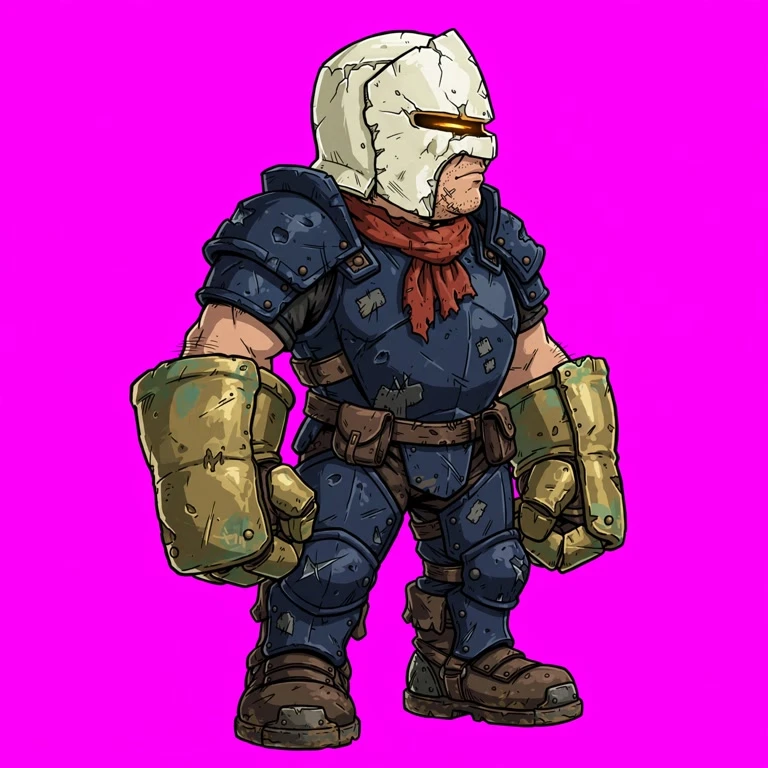
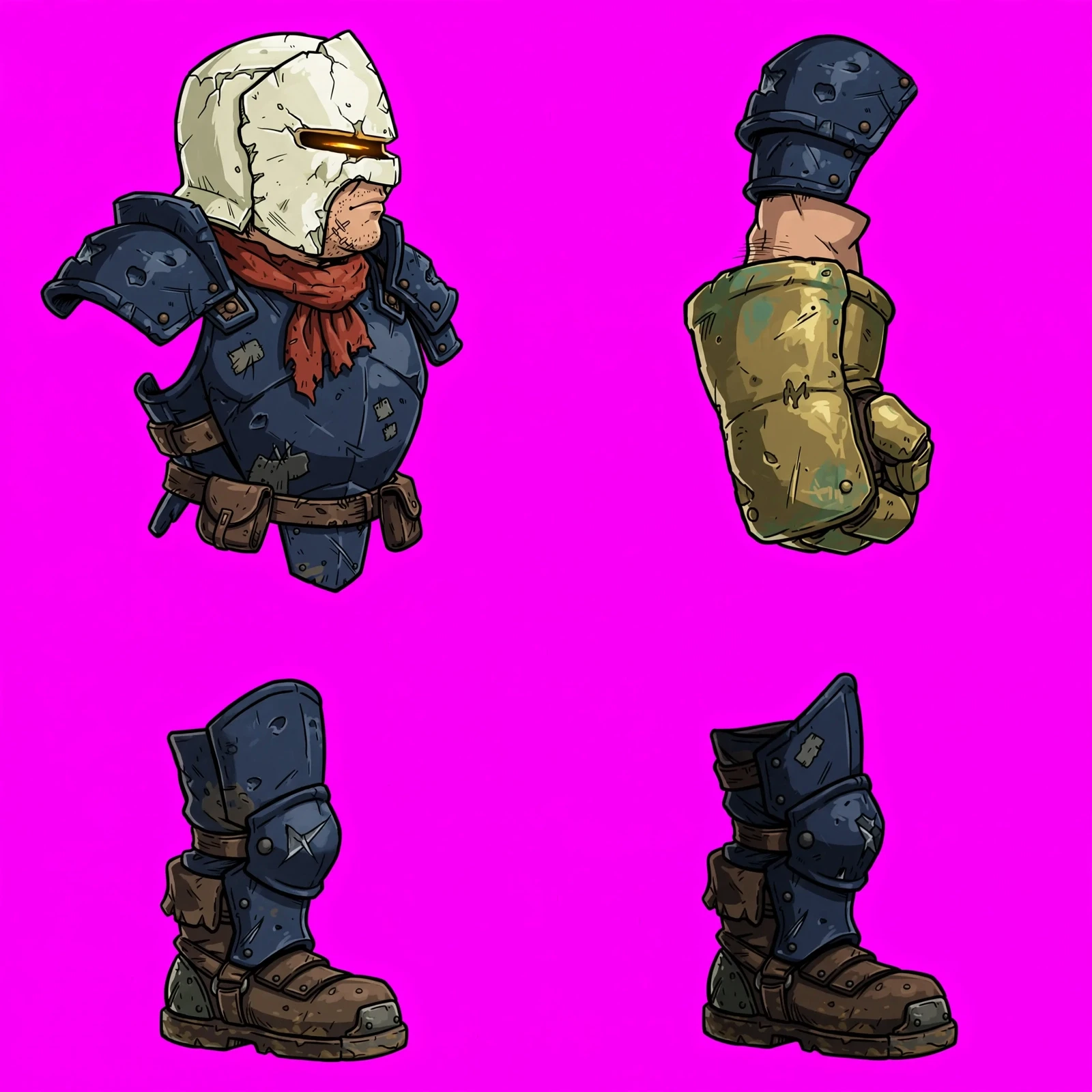
Furnace knight reference plus four-quadrant parts. Magenta is for cutout.
Inputs and run details
Character
A compact furnace knight with a cracked ivory helmet, narrow glowing amber visor, dark navy armor, a short rust-red scarf, oversized weathered brass gauntlets and heavy boots. Determined, heavy, battle-scarred. No weapon, no wings. Stylized hand-painted 2D action-platformer art with strong outlines and an instantly readable silhouette.
Open workflow ↗How it worksDownload workflowOriginal sampled graph
Compare four image models
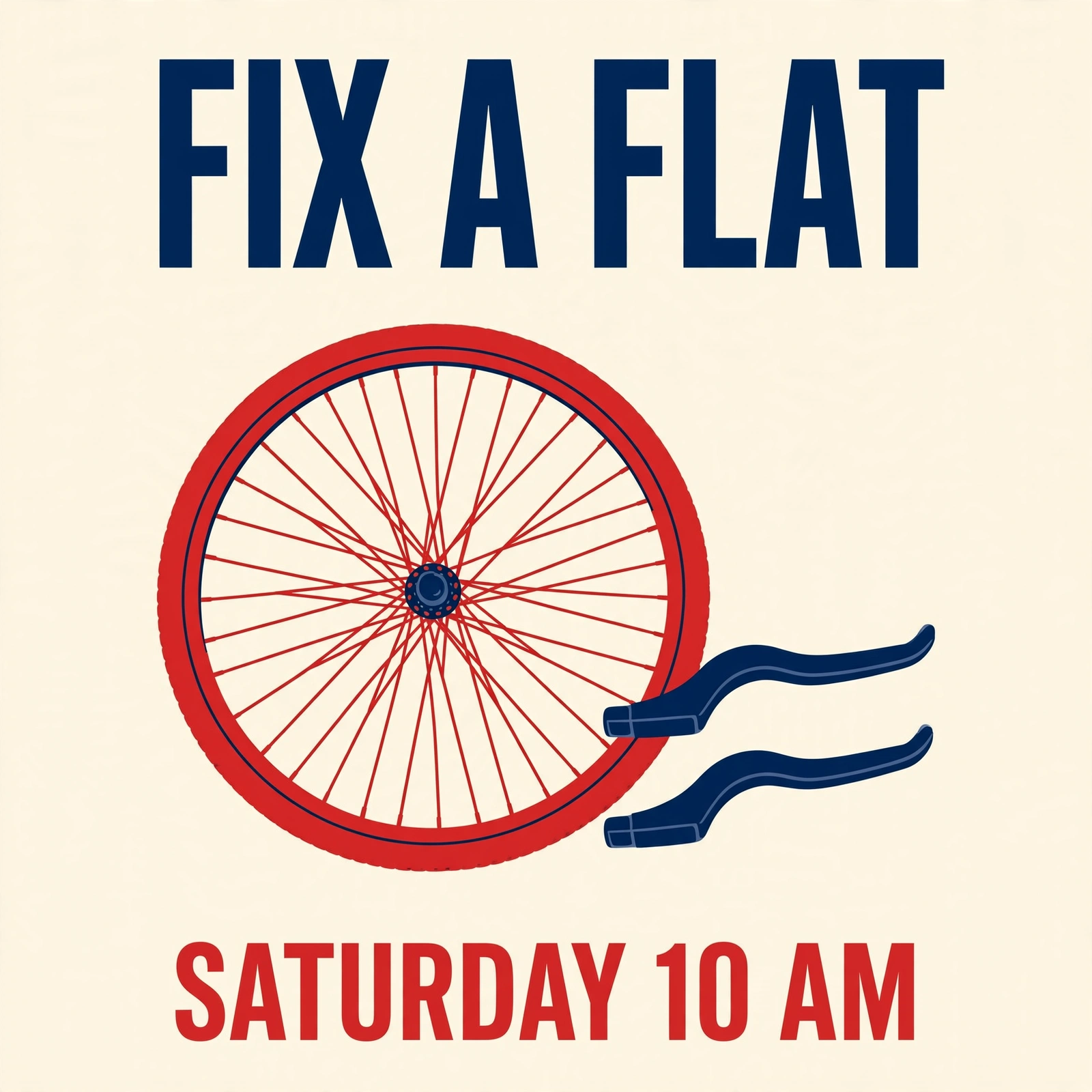
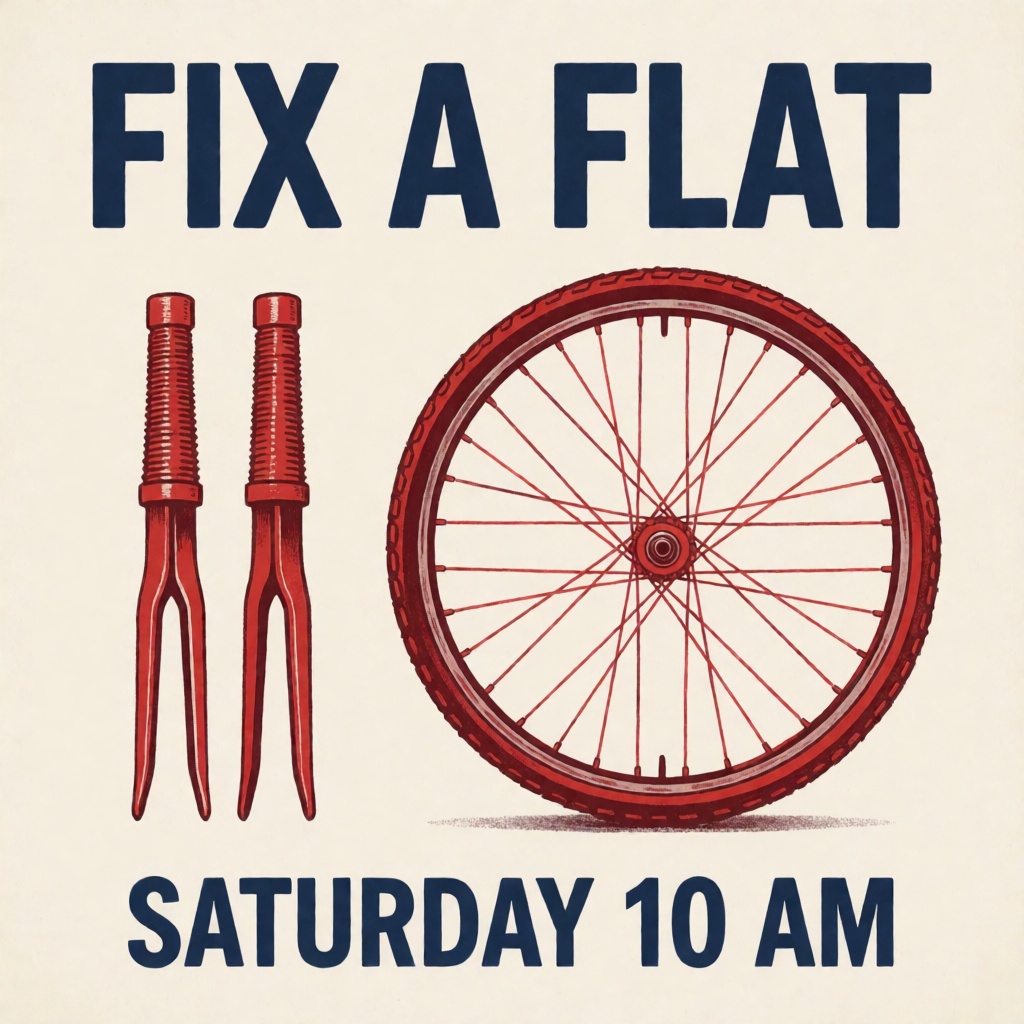
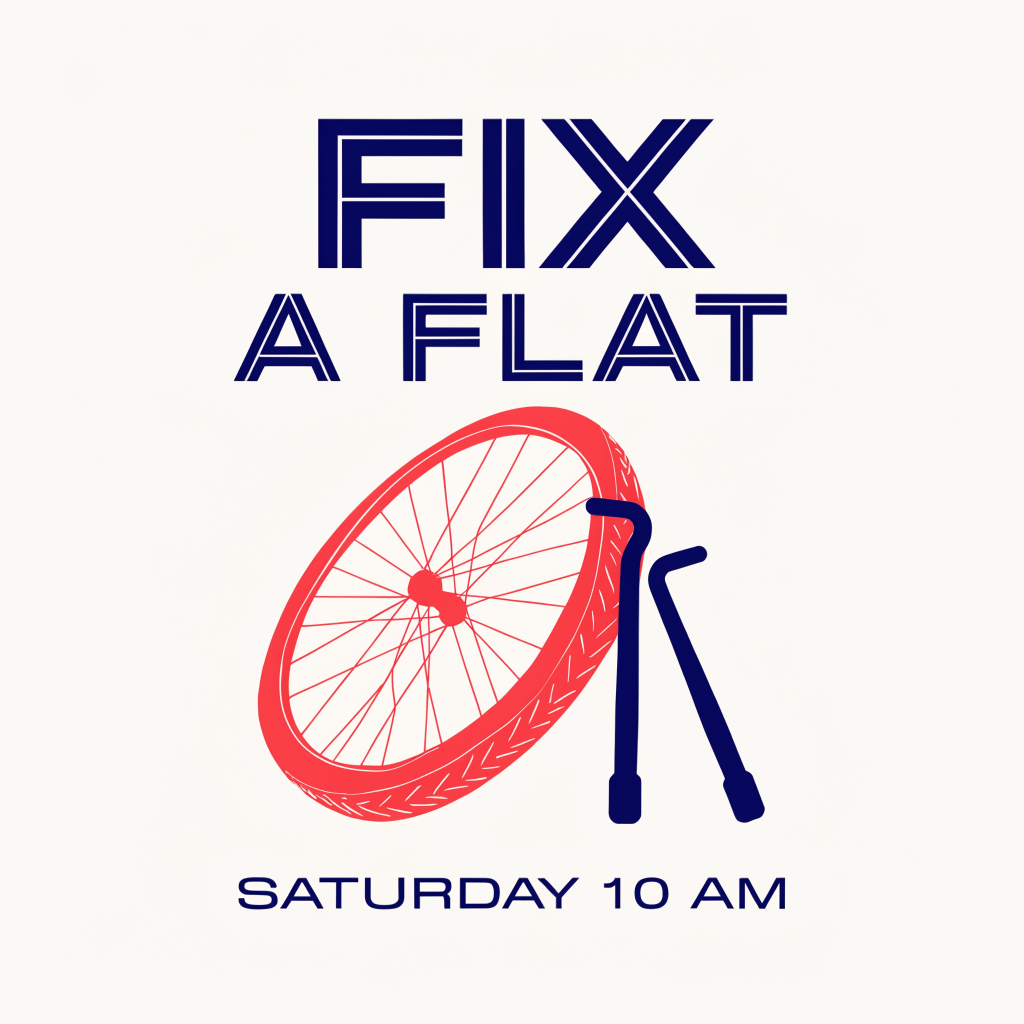
Four versions of the same bicycle-workshop poster. Compare the exact lettering and the tire-lever shapes. These saved results use Krea for contender 2; the current workflow uses Flare, which has not been sampled here.

Inputs and run details
Shared test brief
Create a square poster for a bicycle repair workshop. Exact heading: FIX A FLAT. Exact footer: SATURDAY 10 AM. A single red bicycle wheel rests beside two tire levers on a cream background. Flat editorial illustration, navy and red palette, clear hierarchy, large readable type. No extra words or objects.
The shared brief is unchanged. Contender 2 now uses Flare in place of Krea; its current output and run cost will differ from this saved comparison.
Open workflow ↗How it worksDownload workflowOriginal sampled graph
From scene to short clip
Five sampled frames keep the mug and desk stable while the steam changes. Watch the clip to judge the motion; a seamless loop is not guaranteed.
Inputs and run details
Still brief
A ceramic mug of hot tea on an oak desk beside a closed notebook. Soft morning window light from the left, plain warm-gray wall, close three-quarter view, entire mug visible, clear handle silhouette, faint steam above the tea, no text or logos.
Motion brief
Locked camera for five seconds. A thin wisp of steam rises slowly from the tea and curls gently in the window light. The mug, desk and notebook remain completely still. Preserve their shape and placement; no cuts, new objects or camera motion.
The current workflow uses the provider’s renamed video model ID. The original sampled graph is preserved below.
Open workflow ↗How it worksDownload workflowOriginal sampled graph
Sing: trip-hop about the singularity
A 2:35 song from the original singularity/trip-hop idea and preferred-band references. The generated lyrics, arrangement and avoid-list are saved below. The waveform preview comes from this recording. A model-assisted listening check described lo-fi alternative pop with a breathy female vocal, so the requested trip-hop style is only partly realized. Listen to judge the result yourself.
[Verse 1] Streetlight hums through venetian blinds Your voice downloads slow down the line You learned to love from a thousand minds Now you wait for me to catch up in time [Chorus] But you're already gone, already gone Left your shadow in the song Already gone, already gone I keep dancing with the dawn You don't need me anymore [Verse 2] Rain on concrete, static in the walls I count your heartbeats in phone calls You said forever like a fire exit sign I was human, you were half-divine [Chorus] But you're already gone, already gone Left your shadow in the song Already gone, already gone I keep dancing with the dawn You don't need me anymore [Bridge] Turn the volume down, turn the century low Everything we were, somewhere in the code If I unplug the night, will you come back slow Come back slow [Chorus] 'Cause you're already gone, already gone Left your shadow in the song Already gone, already gone I keep dancing with the dawn You don't need me anymore [Outro] Already gone... already gone Vinyl spinning, nobody home Already gone... already gone
Slow, brooding trip-hop at ~75 BPM: dusty breakbeat loops with vinyl crackle and tape hiss, deep sub-bass pulses, sparse noir guitar and Rhodes washes drenched in reverb, ghostly analog synth drones. Female vocal delivered smoky and detached, half-whispered, echoing with melancholy delay; Intimate, wistful, futuristic-noir mood with filtered vocal samples bleeding beneath the surface.
Bright four-on-the-floor kick, shouted belted vocals, crisp polished snare without crackle or swing.
Inputs and run details
Song idea
Write a wistful 90s trip-hop track about the singularity.
Preferred bands
Portishead, Massive Attack, Tricky
Open workflow ↗How it worksDownload workflowOriginal sampled graph
A presenter for your script
A fictional museum guide reads the workshop introduction. Sampled frames retain the face; model-assisted audio review recovered the script. Watch playback to judge lip sync.
Inputs and run details
Presenter look
A fictional friendly male museum guide in his thirties, wearing a plain navy shirt, shoulders-up front-facing portrait. Relaxed neutral expression, unobstructed face and mouth, eyes toward camera, soft even light, simple warm-gray background. No glasses, hats, text or logos.
Spoken script
Welcome to the workshop. Start with the blue tray on your table. Inside you will find paper, a pencil, and the parts for your first model.
Delivery
Natural calm delivery, subtle blinks and small head movements. Keep the face and mouth visible, eyes toward the camera, body position stable. Locked camera, no cuts or extra people.
The current workflow uses the provider’s renamed avatar model ID. The original sampled graph is preserved below.
Open workflow ↗How it worksDownload workflowOriginal sampled graph
Neon shrine duel
GLM writes the Anima still, then the H3 Max clash. Both fighters stay framed through the overhead cut.
Inputs and run details
Fight seed
Neon shrine rooftop duel at midnight — fox-masked sword dancer vs chrome oni courier, rain, sakura sparks, cinematic anime fight keyframe
Open workflow ↗How it worksDownload workflowOriginal sampled graph
FLUX.3 vs Seedream 5.0 vs Ideogram 4.5 vs Recraft V4.1 vs MOSS Image: same poster, side by side
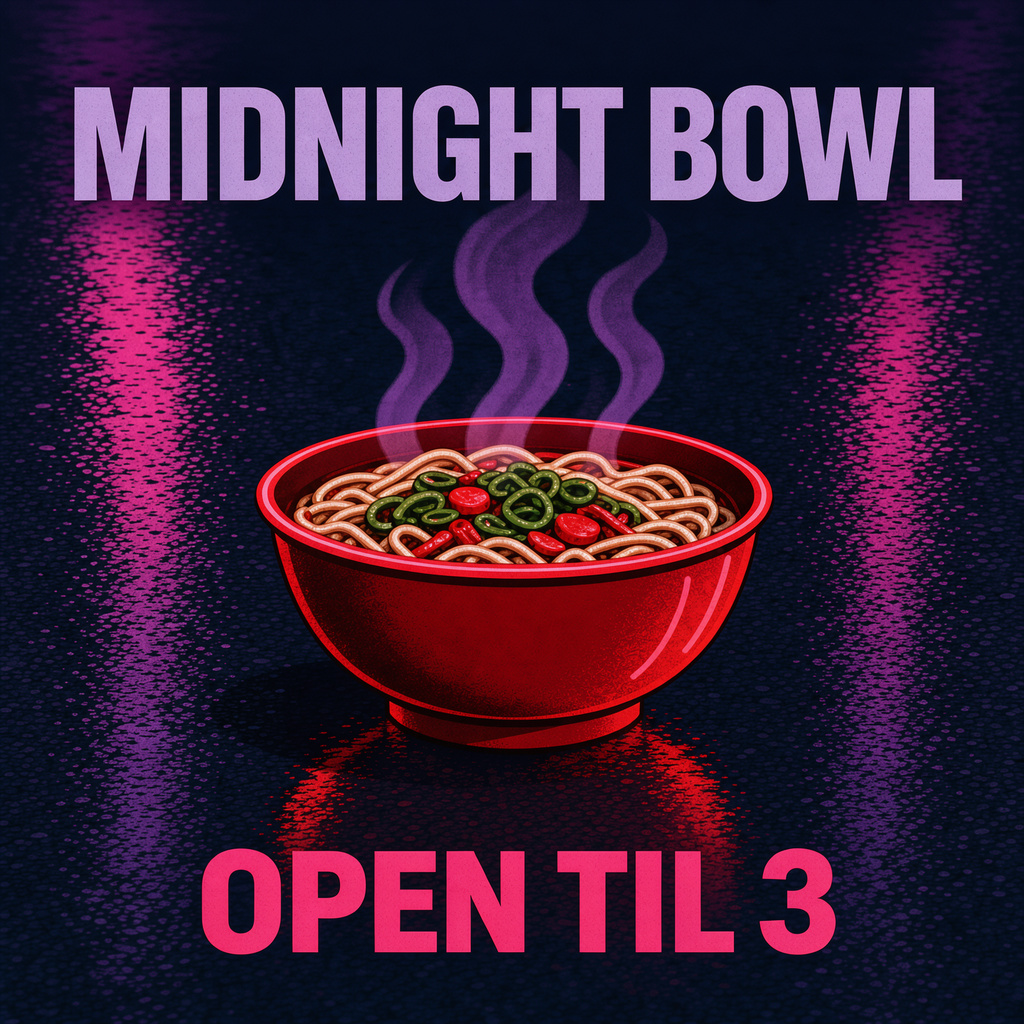
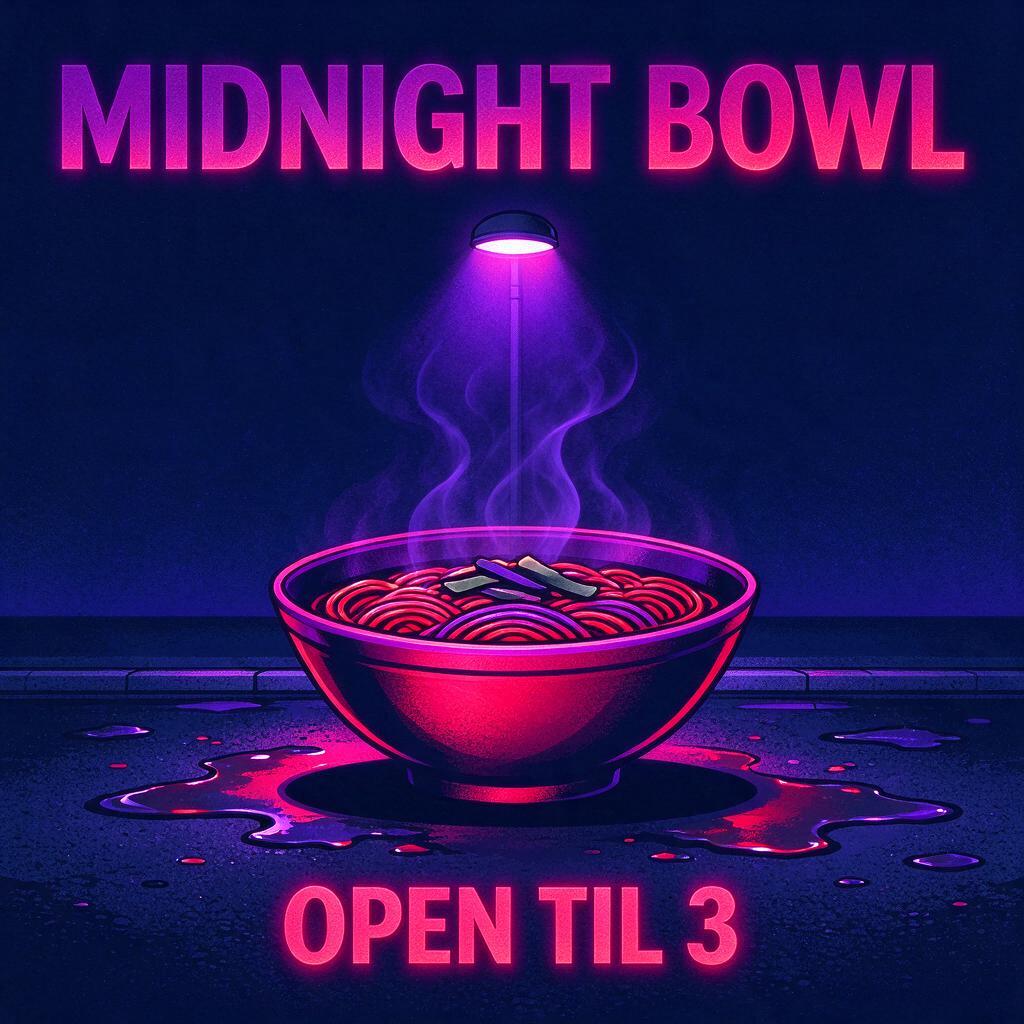
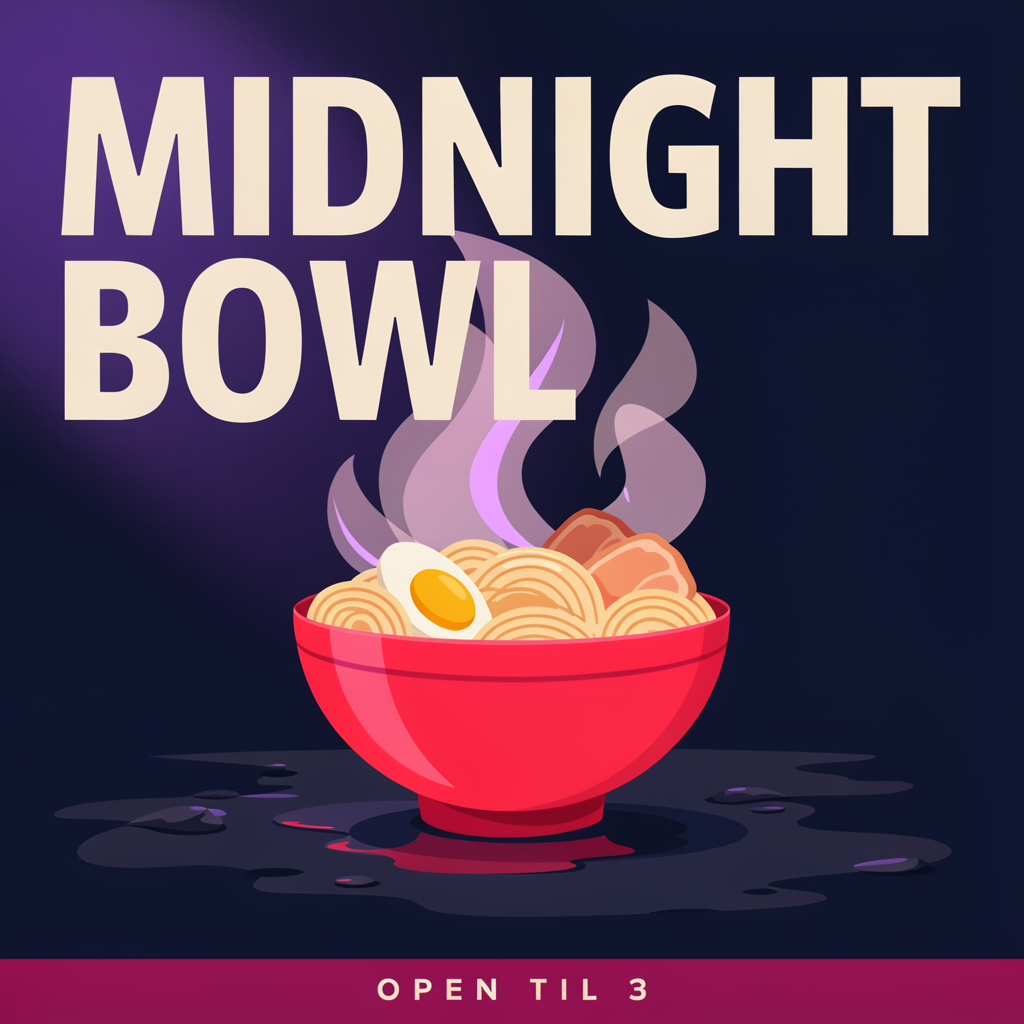
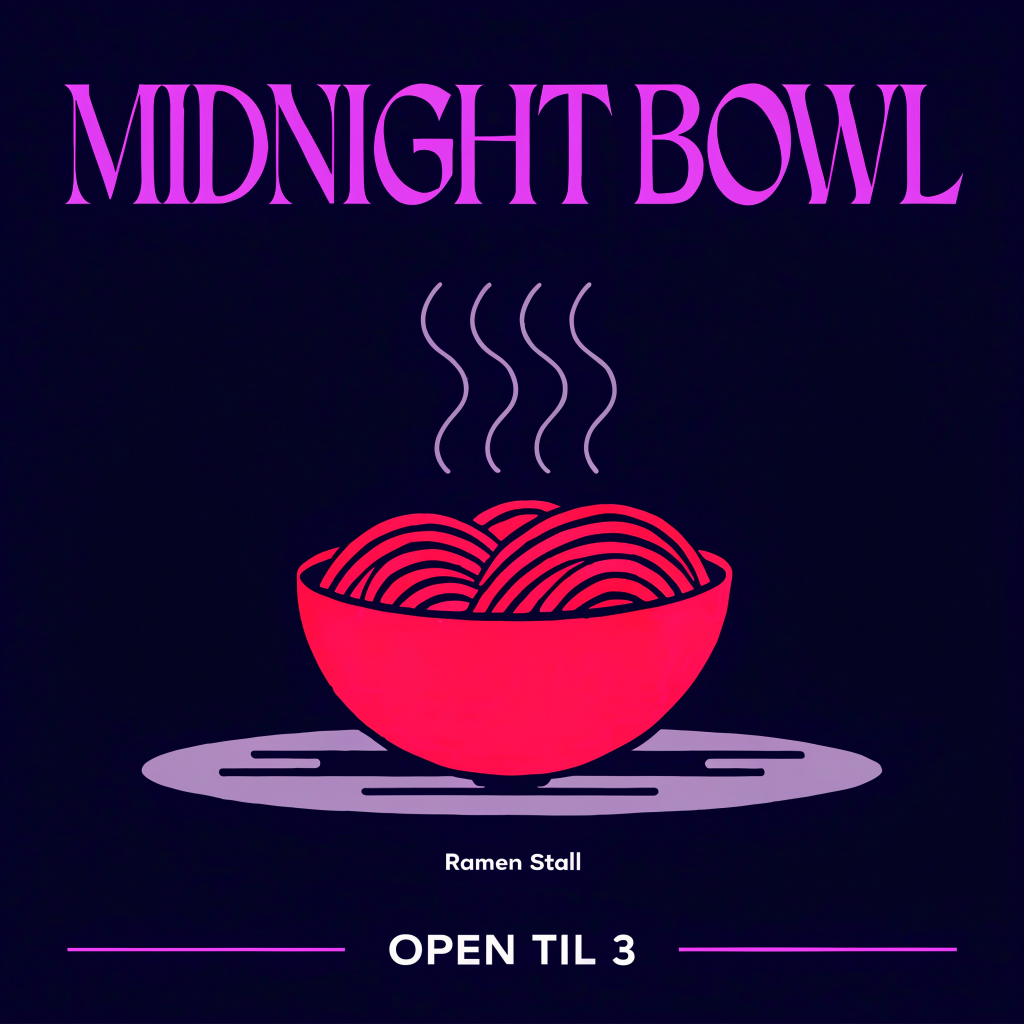
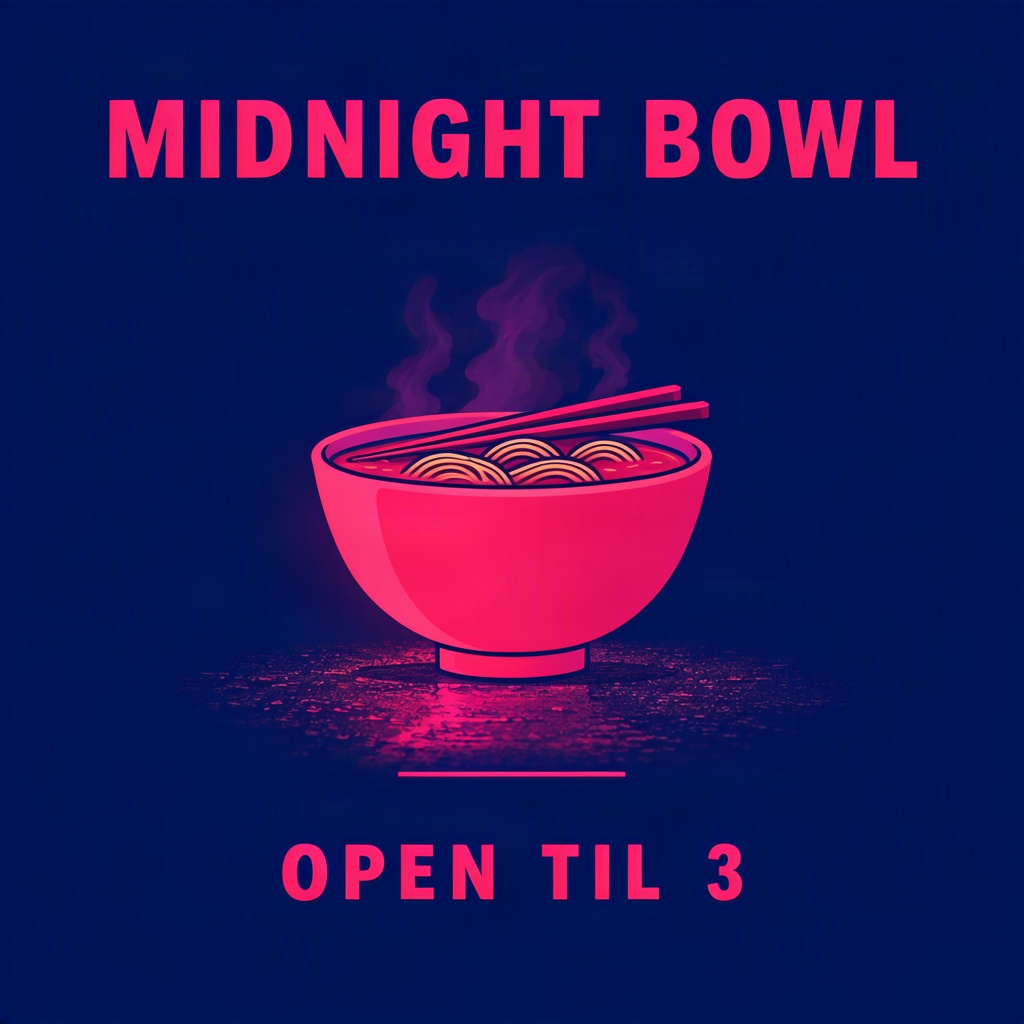
FLUX.3 prints MIDNIGHT BOWL and OPEN TIL 3 cleanly. Seedream nails both lines and the mood. Ideogram stacks the heading and shrinks the footer into a band. Recraft V4.1 Flash is the cheapest, and adds “Ramen Stall”. MOSS Image (added 2026-10-19) prints both lines exactly with no extra words, but adds chopsticks to the bowl.
Inputs and run details
Shared poster brief
Create a square poster for a midnight ramen stall. Exact heading: MIDNIGHT BOWL. Exact footer: OPEN TIL 3. A single neon-red noodle bowl sits on wet asphalt under violet streetlight steam. Flat editorial illustration, navy and magenta palette, clear hierarchy, large readable type. No extra words or objects.
Open workflow ↗How it worksDownload workflowOriginal sampled graph
Grok Imagine 1.5 Lite vs HeyGen Video 1 vs MiniMax H3: same prompt, side by side
Grok Imagine Video 1.5 Lite: Black chopsticks haul a thick clump of wavy noodles out of a full bowl; violet steam and wet-asphalt purple reflections hold the whole shot. HeyGen Video 1: Starts on a nearly empty ridged bowl with purple/cyan rim light; chopsticks show mid-clip, then one translucent strand drops into magenta haze. MiniMax H3: One wooden chopstick lifts a single noodle strand from a matte-black bowl; magenta steam and rain beads read sharp at 1440p.
Inputs and run details
Shared video brief
Cinematic night product shot of a matte-black ceramic ramen bowl on wet asphalt. Violet neon rim light and magenta steam curling upward. A single chopstick lifts one glossy noodle strand in slow motion. Shallow depth of field, rain droplets catching light, locked low-angle camera with a gentle push-in. Dark editorial look, no text, no logos, no extra props.
Open workflow ↗How it worksDownload workflowOriginal sampled graph
Idea to concept art to 3D model
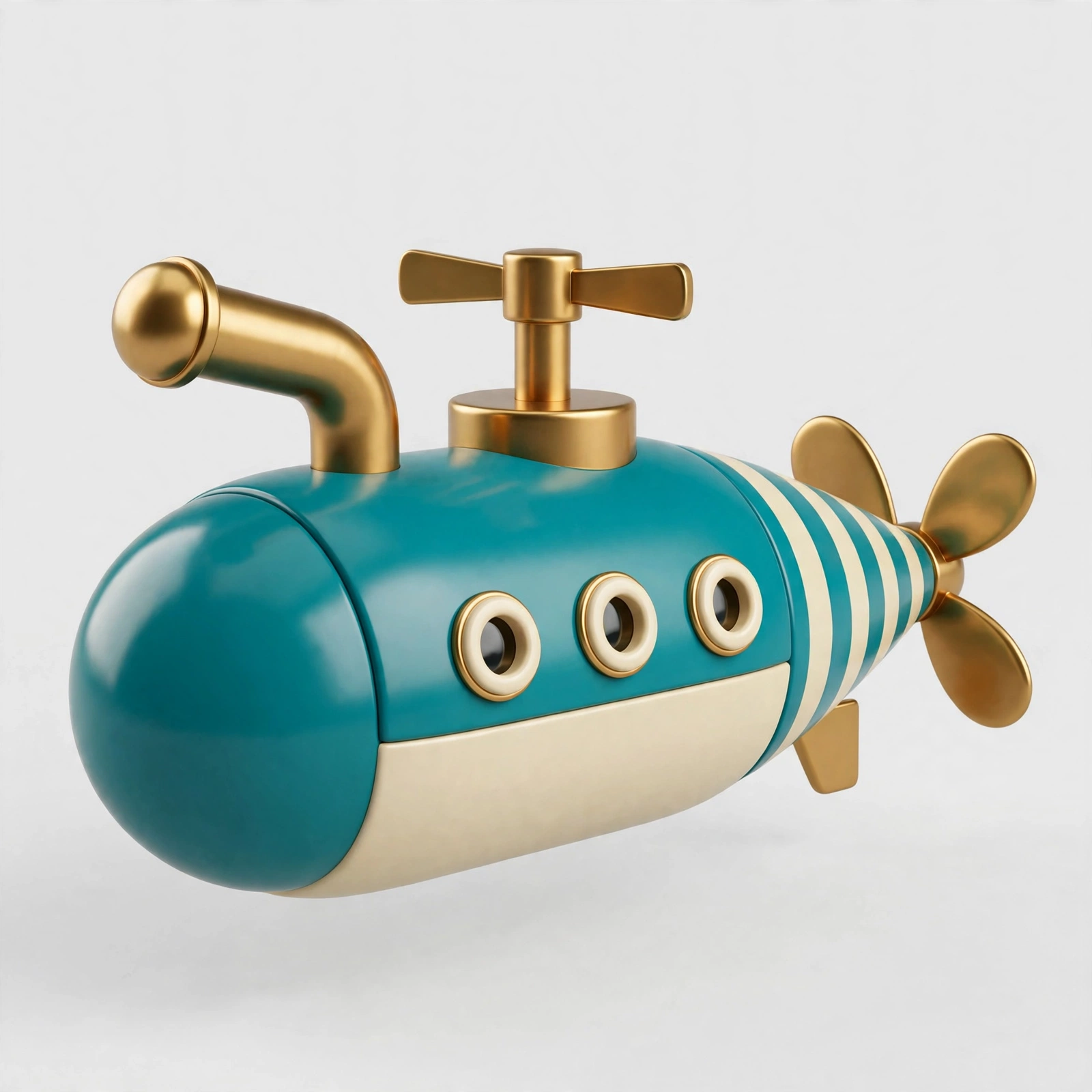
GLM 5.3 Flash turns a one-line object idea into a concept description: a teal capsule-shaped toy submarine with a cream belly band, a brass periscope, three cream-rimmed portholes, a brass wind-up key, and a striped tail cone with a three-blade propeller. Join adds fixed render rules (one whole object, three-quarter view, plain light-gray background, no props), and Muse paints the concept. TRELLIS.2 (1024 geometry, 1024 textures, about 80k faces) turns that single picture into a 3.6 MB textured GLB. Orbiting it in nanoodle's 3D viewer shows a complete toy from every side, including a far side and back that the picture never showed: portholes on both flanks, the striped tail, the propeller blades, the key, and the periscope. Flaws: the viewer renders it flatter and less glossy than the concept, the thin key and propeller blades go soft at some angles, and the cream band on the far side is a plainer flat strip. Inspired by @patchmonkeydev's prompt → concept → multi-view → 3D ComfyUI pipeline on X; no media from that post is used.
Inputs and run details
Object idea
A chunky wind-up toy submarine with a brass periscope, three round portholes, a striped tail propeller and a big wind-up key on top, painted teal and cream.
The editor workflow also points the 3D node at the saved GLB as its sample, so you can orbit the result before running; ▶ Run replaces it. Everything else matches the sampled graph.
Open workflow ↗How it worksDownload workflowOriginal sampled graph
Blockout first, then the shot
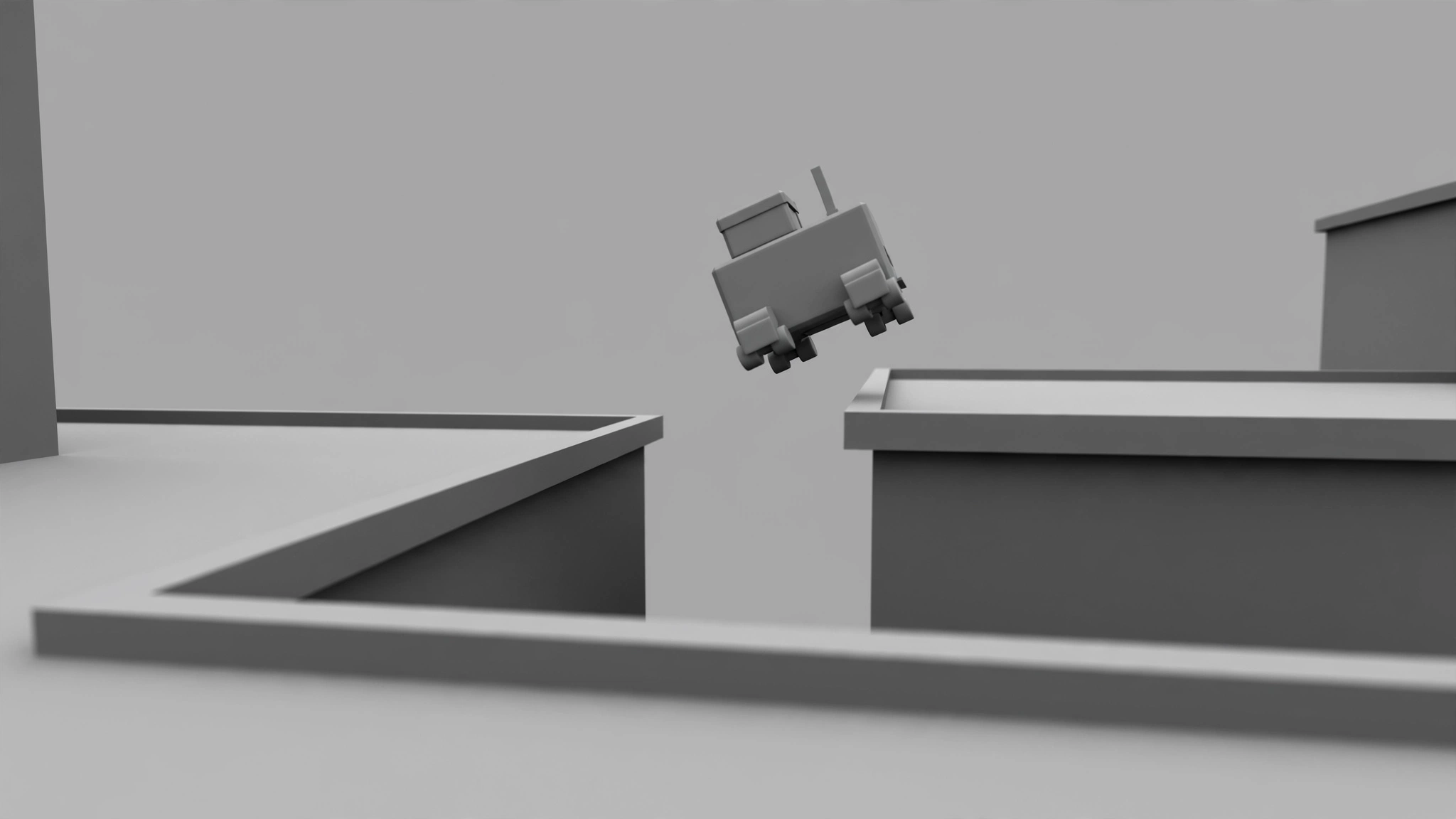
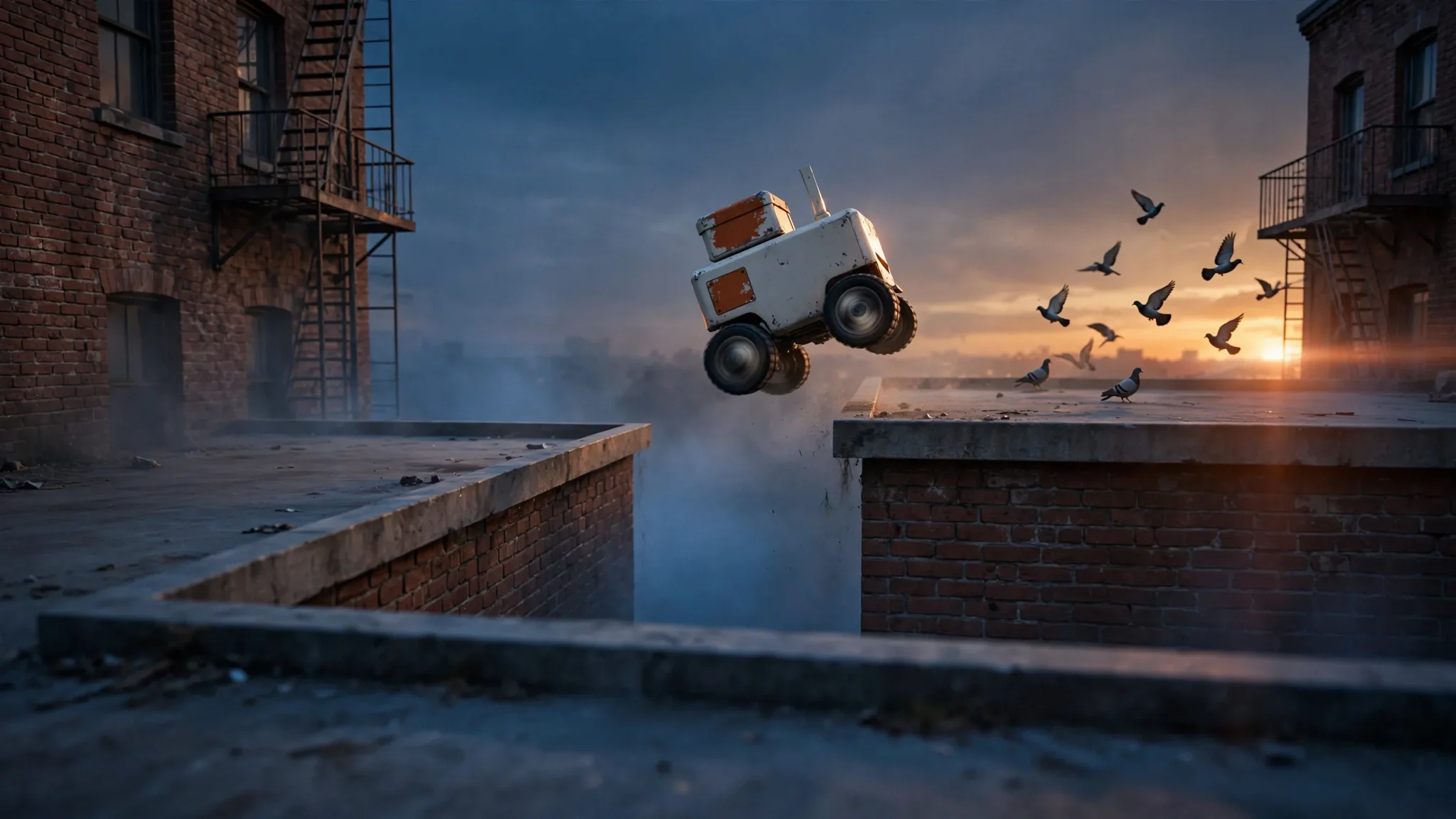
GLM 5.3 Flash writes three prompts from one action idea: a grayscale blockout prompt, a look bible, and a motion brief. Join puts a fixed keep-composition line in front of the look bible and a short animate line in front of the motion brief. Muse paints the blockout: matte gray rooftops and one boxy wheel-legged robot mid-leap over the gap, seen from a low rooftop camera. Muse Edit restyles it into weathered brick, fire escapes, a dusk sky, and an off-white robot with orange panels, keeping the blockout's layout, robot pose, and camera; it also adds a flock of pigeons that the look bible asked for. Seedance 1.5 Pro (720p, 5 s, silent) animates the finished still: the robot sails over the gap, spins sideways in mid-air, lands on the far roof, and the camera swings round behind it as it rolls toward the sunset. Flaws: the mid-air spin was not asked for, the landing has no crouch-and-settle, and the robot keeps rolling instead of holding still. Inspired by ComfyUI's blockout-then-restyle post on X; no media from that post is used.
Inputs and run details
Action idea
A boxy courier robot with stubby wheel-legs leaps a narrow rooftop gap between two brick buildings at dusk. Low tracking camera from the near rooftop; the robot pushes off the ledge, sails across the alley, and lands on the far roof with a soft crouch.
Open workflow ↗How it worksDownload workflowOriginal sampled graph
Write a story, get a shot
A cream paper fox folds a yellow boat on a rainy windowsill, launches it into a curb puddle, and watches under a leaf umbrella as it drifts past a red bicycle. GLM 5.3 Flash keeps the prose free of shot-list jargon; MiniMax H3 invents the framing. Flaws: the umbrella is a green leaf, and the blue mailbox reads as a blue door/box. Checked frames are SFW.
Inputs and run details
Story
A small cream-colored paper fox with ink-dot eyes folds a yellow paper boat on a rainy windowsill. When the rain softens, the fox carries the boat downstairs, sets it in a puddle by the curb, and gives it one gentle push. The boat drifts past a red bicycle and a blue mailbox as the fox watches from under a leaf umbrella.
Story-mode rules
SFW family-friendly short film. Treat the following as a short story to film. Invent your own camera angles, pacing, and staging. Do not add on-screen text, logos, or watermarks. Story:
Inspired by ComfyUI users who feed MiniMax H3 a plain story instead of camera angles (https://x.com/EndFolding79421/status/2109791105671700721). Original media not copied.
Open workflow ↗How it worksDownload workflowOriginal sampled graph
Orbit the character
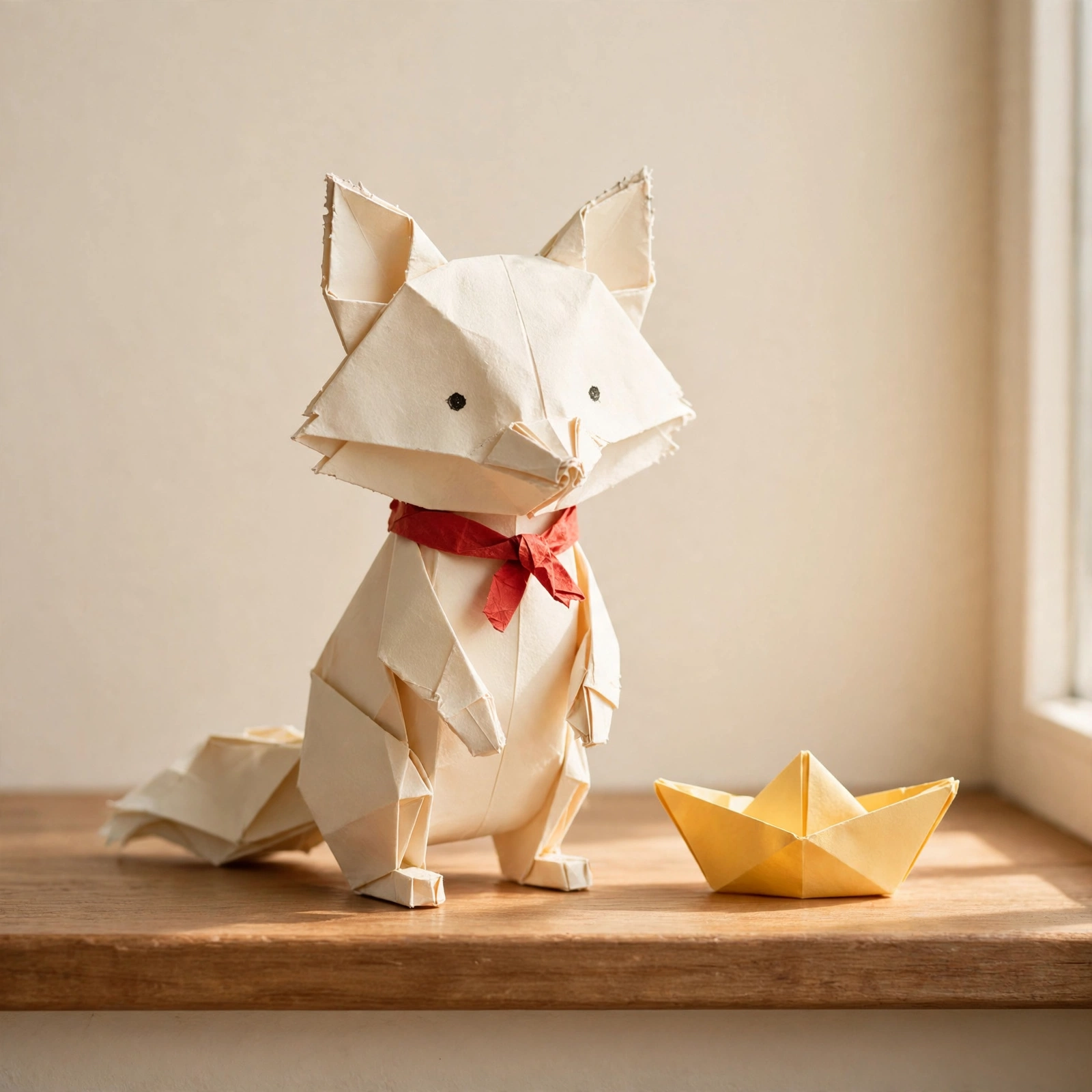
A cream paper fox with a tiny red scarf stands on a sunny wooden windowsill next to a yellow paper boat. GLM 5.3 Flash writes one Muse still prompt; Muse paints the 1:1 still; MiniMax H3 Max Multi Angle (orbit-right 90°, 480p, 5 s) turns the camera around the same subject so you see new sides without rewriting identity. Flaws: the orbit ends closer to a side/three-quarter view than a hard back shot, the yellow boat drifts a little relative to the fox, the scarf sometimes reads as a bow, and the background invents a deeper room as the camera moves. Checked frames are SFW. Inspired by ComfyUI multi-angle character workflows shared via @ai_hakase_ (https://x.com/ai_hakase_/status/2110356121911283849); no media from that post is used.
Inputs and run details
Character seed
A cream paper fox with ink-dot eyes, tiny red scarf, standing on a sunny wooden windowsill next to a yellow paper boat, soft daylight, full body, three-quarter front view, plain cream wall behind.
Still rules
Write ONE still-image prompt for Muse text-to-image from the character seed above. Preserve the exact design and props; full body with margin; fixed three-quarter or front camera; soft natural light; NO motion words, NO camera moves, NO animate, NO multiple frames; family-friendly SFW paper craft only; no text overlays; ≤120 words; output ONLY the prompt text.
Inspired by ComfyUI "Múltiplos ângulos de personagens" / multi-angle character workflows (https://x.com/ai_hakase_/status/2110356121911283849). Original media not copied.
Open workflow ↗How it worksDownload workflowOriginal sampled graph
Same shot, three looks
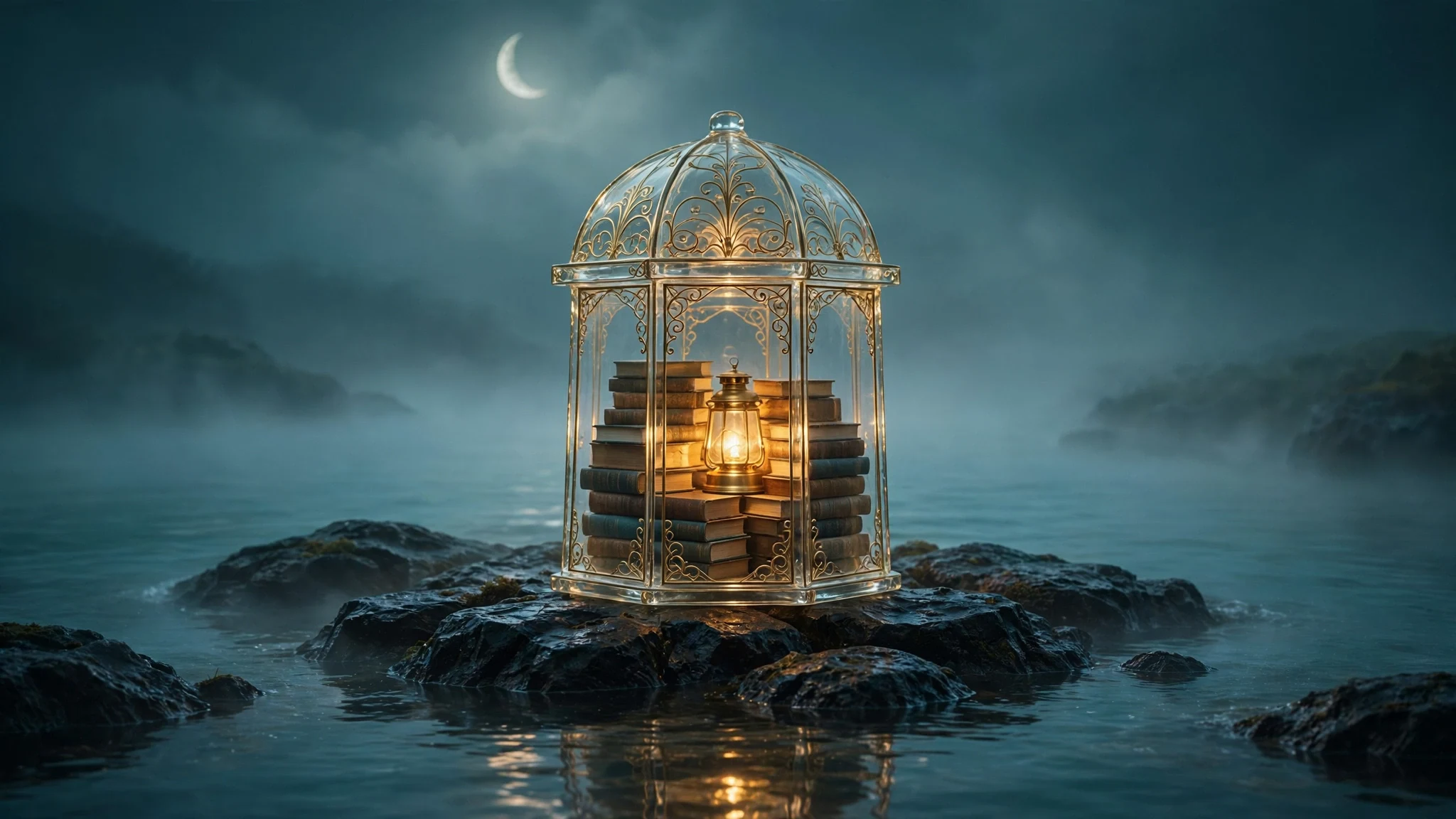
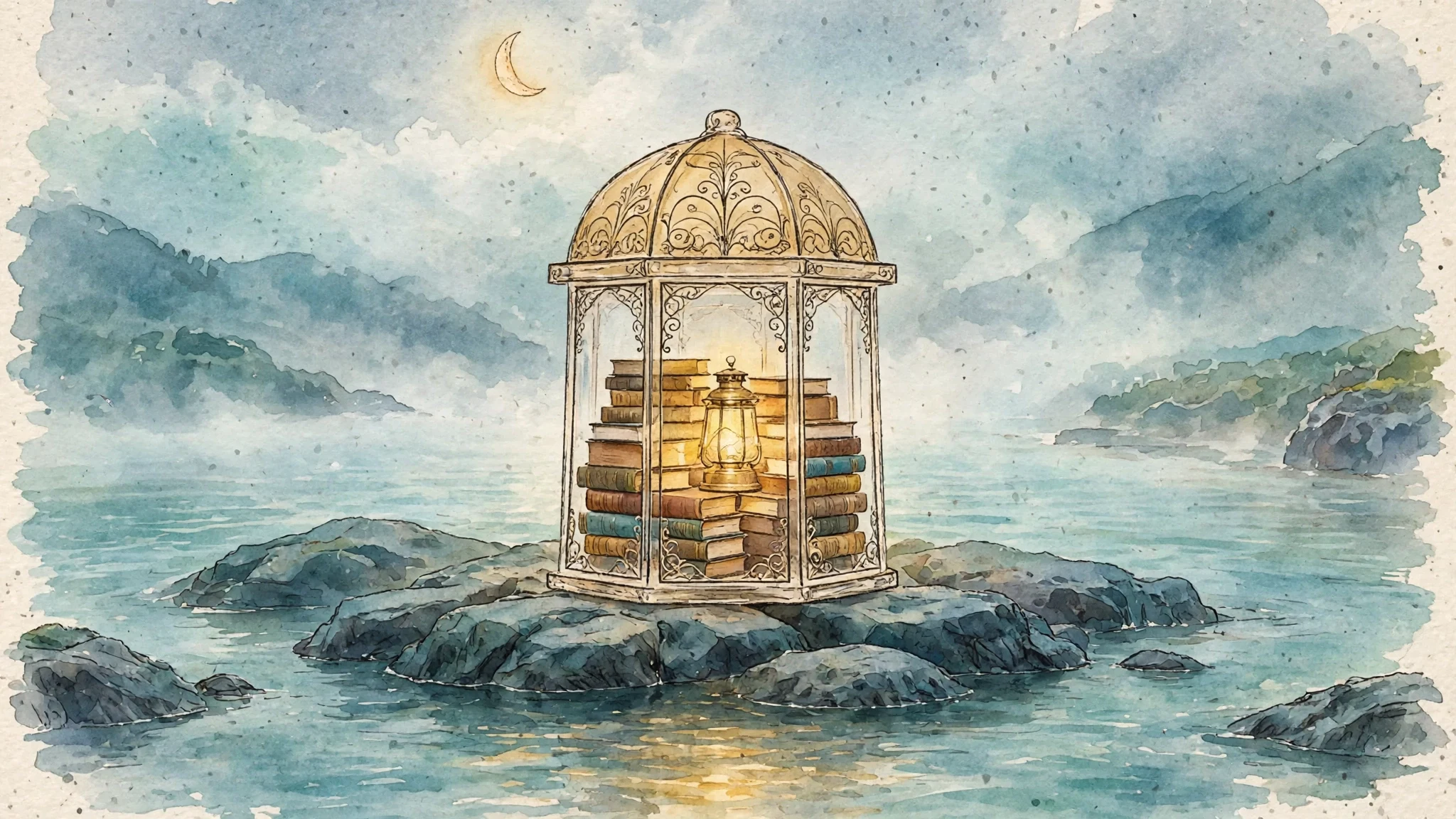
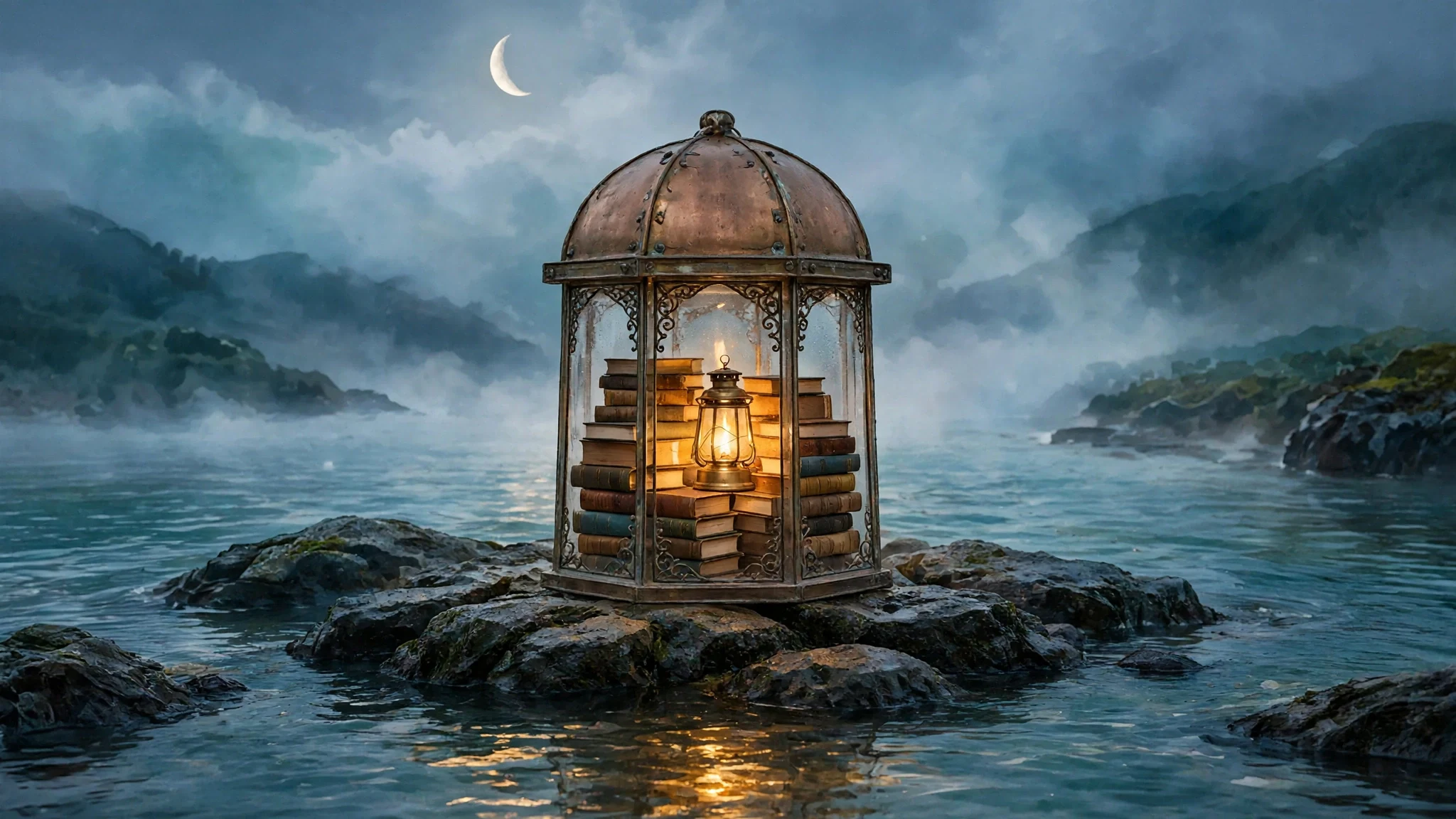
A glass birdcage packed with books and a warm lantern sits on wet rocks in misty teal water under a crescent moon. Muse paints the glass look; Muse Edit restyles it to watercolor, then to photoreal fantasy, keeping the same framing. Seedance 1.5 Pro (720p, 5 s, silent) adds ambient motion on the glass still — in this run it invented golden sparkles instead of a clean material morph, so the three stills are the real ladder. Muse also read the lighthouse prompt as a glass birdcage/gazebo; the ladder still holds. Checked frames are SFW (no people). Inspired by ComfyUI style-morph / material-ladder clips such as @eikoung (https://x.com/eikoung/status/2110576332908433628); no media from that post is used.
Inputs and run details
Glass look prompt
A small translucent glass lighthouse filled with stacked books and a warm golden lantern, standing on wet black rocks in misty teal water under a pale crescent moon, clear glass walls with soft gold filigree, reflections on the water, fixed wide eye-level camera, centered composition, soft cinematic lighting, no people, no text, family-friendly SFW.
Watercolor edit
Restyle this exact scene as a soft hand-drawn watercolor illustration on textured paper. Keep the same lighthouse shape, book stacks, lantern, rocks, moon, and camera framing. Flat gentle washes, visible paper grain, ink outlines, muted teal and warm gold. No photoreal glass, no 3D render look, no people, no text overlays, SFW.
Photoreal edit
Restyle this exact scene as a photoreal cinematic fantasy photograph. Keep the same lighthouse silhouette, books, lantern glow, wet rocks, crescent moon, and locked camera framing. Real materials: weathered stone lighthouse, warm practical lantern light, misty teal sea, sharp detail. No cartoon, no watercolor paper, no people, no text overlays, SFW.
Morph motion
Locked camera. The lighthouse materials slowly morph from clear translucent glass and gold filigree into soft watercolor paper illustration, then settle. Same composition the whole time. Gentle mist only. No camera move, no new objects, no people, no text, SFW.
Open workflow ↗How it worksDownload workflowOriginal sampled graph
Mix the references
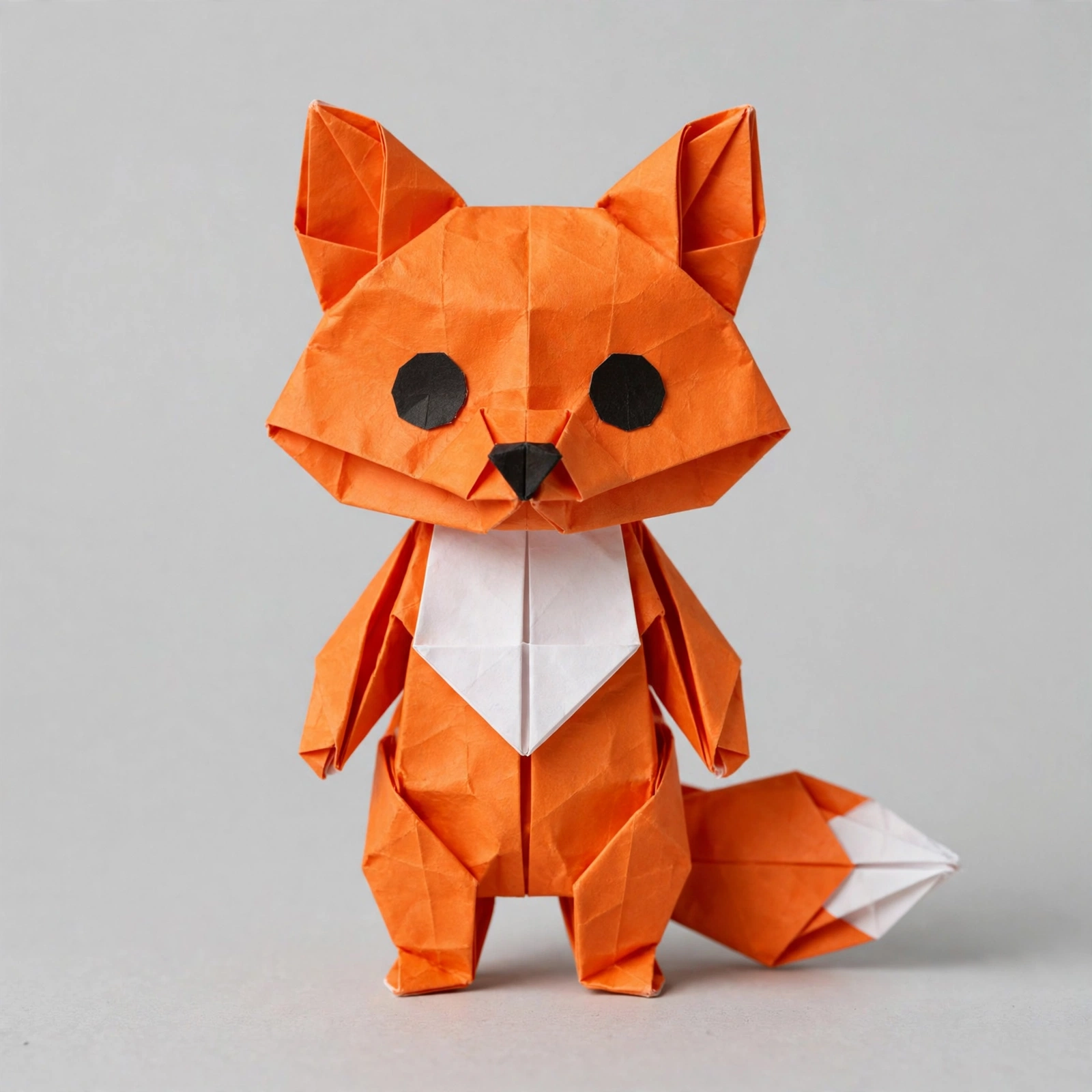
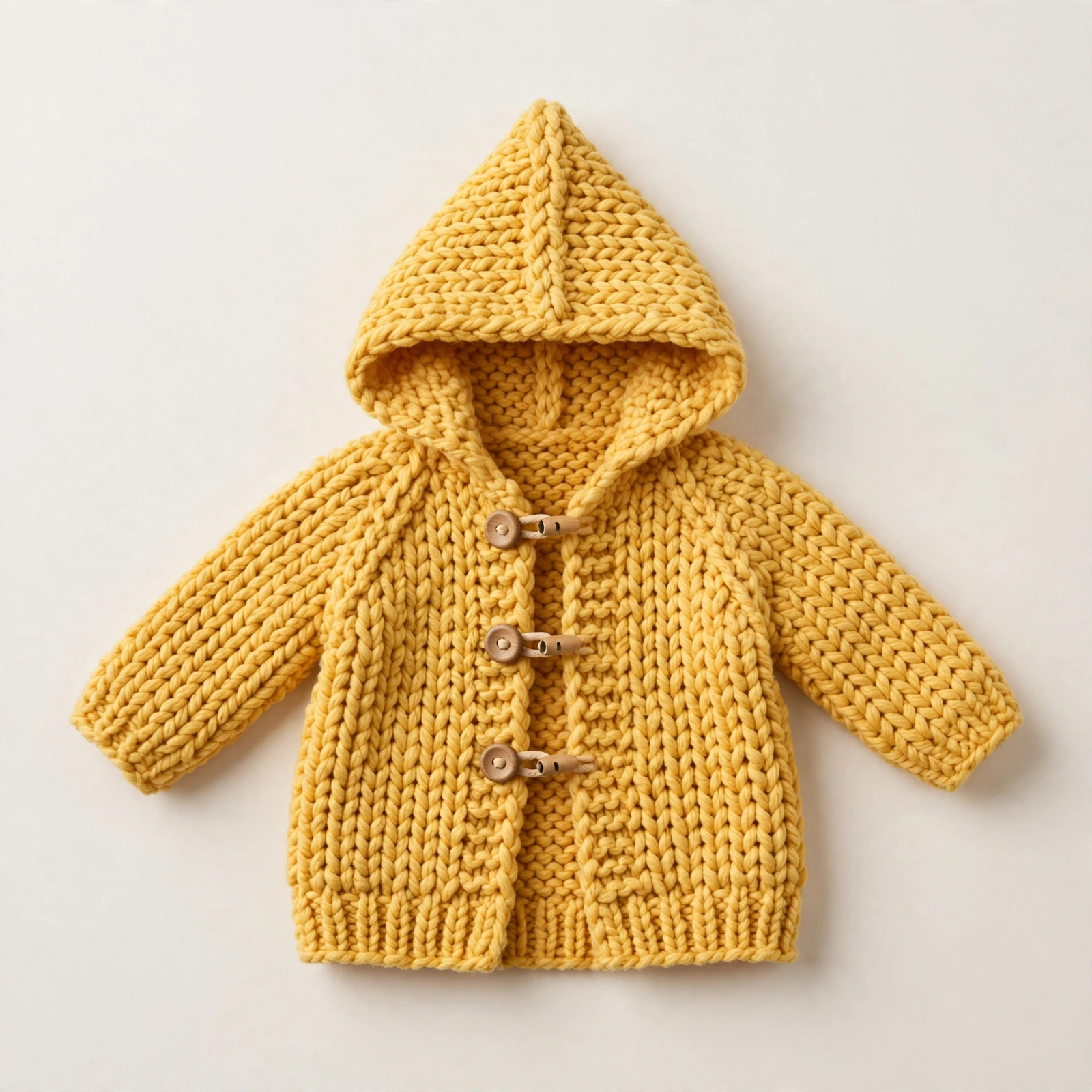
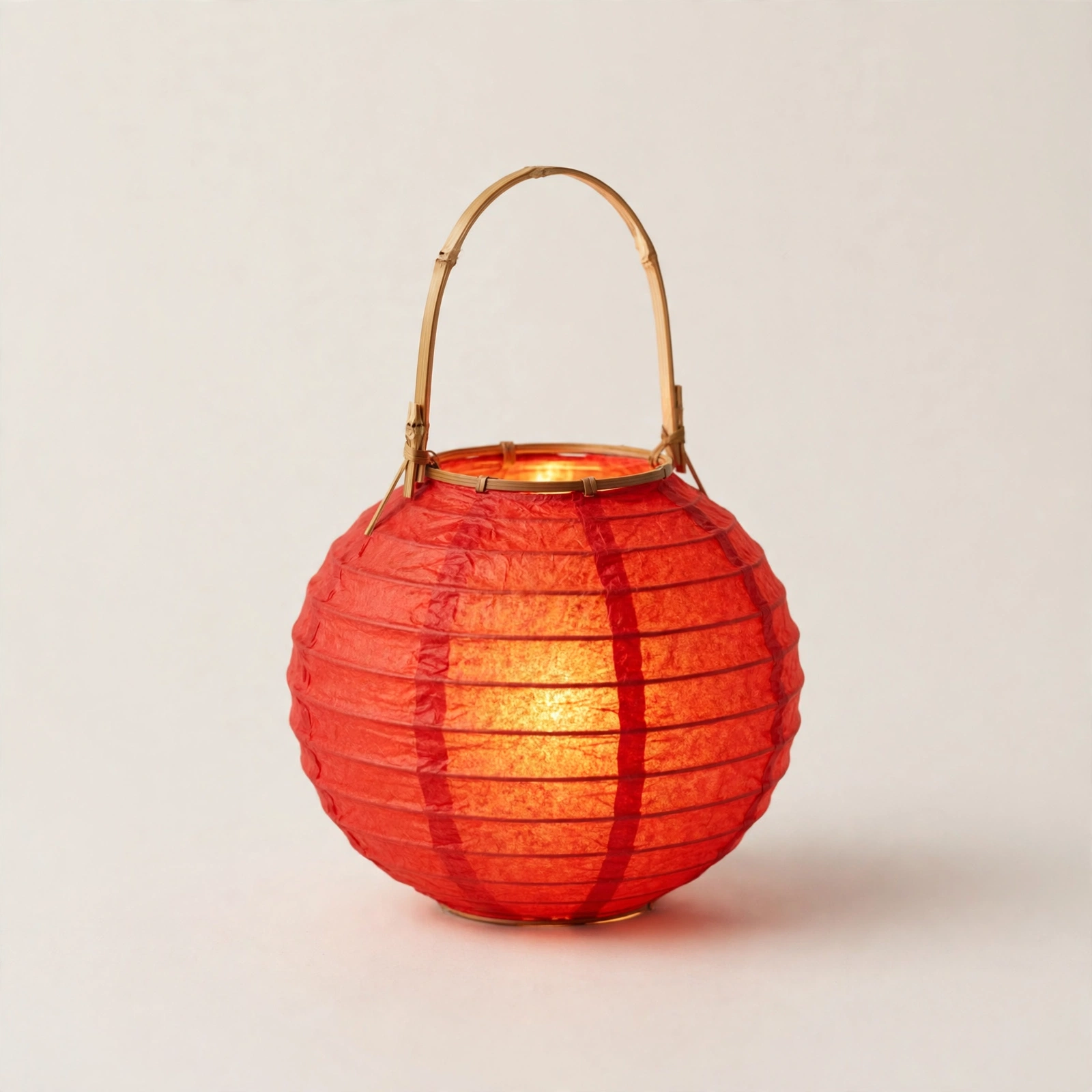
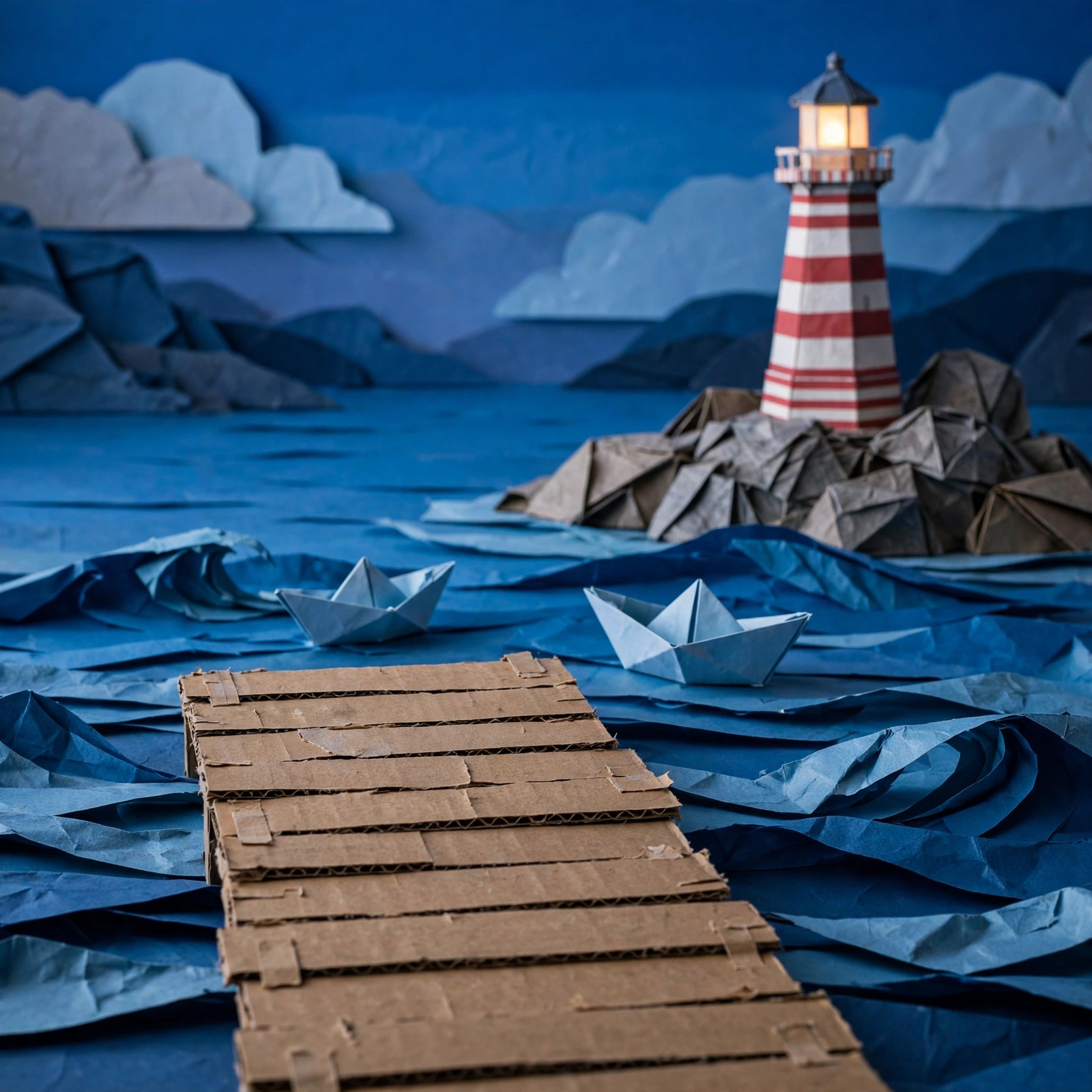
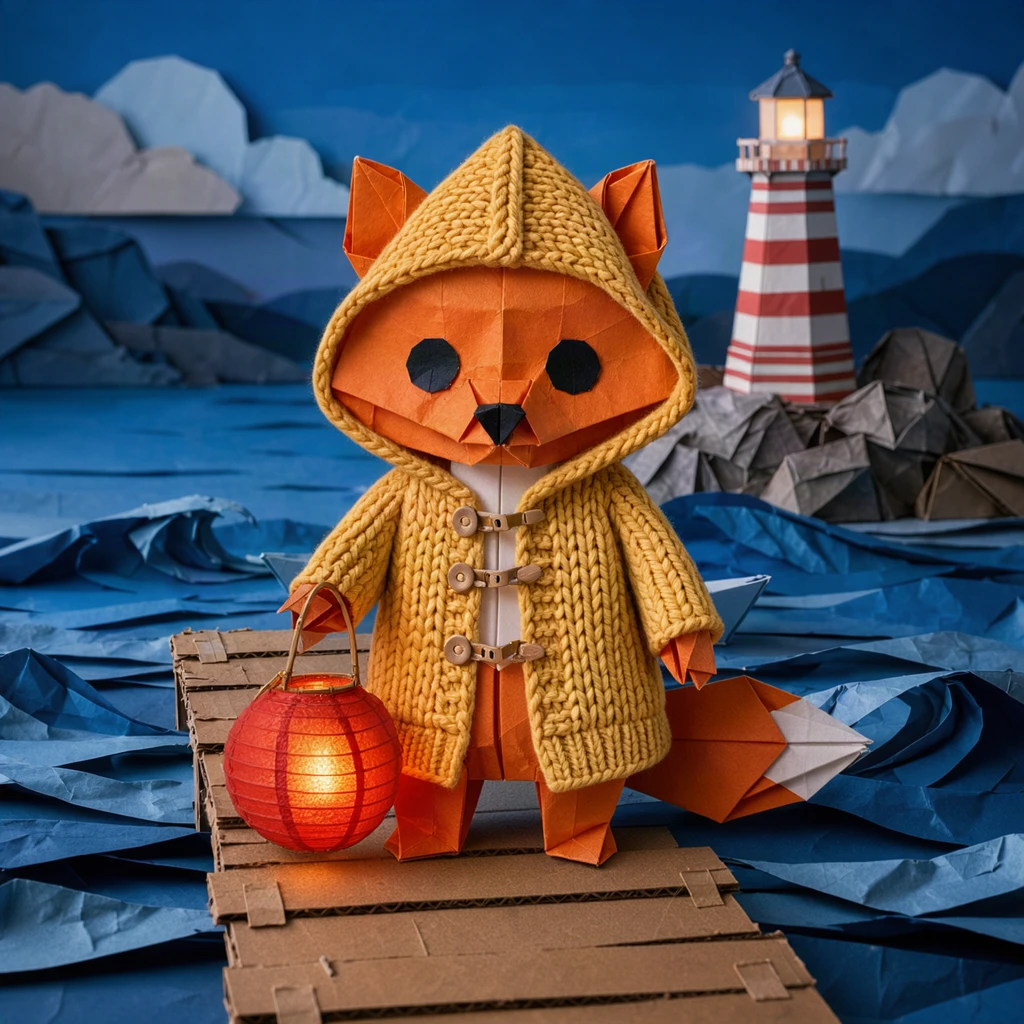
Four Muse stills stand in for your own uploads: a paper-craft fox (image 1), a yellow knitted raincoat (image 2), a red paper lantern (image 3) and a paper harbor pier at dusk (image 4). FLUX.3 Klein Edit gets them in port order (image, image2, image3, image4), and the mix instruction names each one by number. In the result the fox wears the same raincoat with its three wooden toggles and holds the one lantern by its bamboo handle while standing on the cardboard pier, with the striped lighthouse behind it. Flaws: the two paper boats from image 4 mostly drop out, the fox's ears poke through the hood, and the coat comes out longer than the flat-lay reference. A first prompt without “exactly one lantern” gave the fox two lanterns, so the instruction now says it outright. Swap any reference Image node for a 📷 Image input to mix your own photos. Checked outputs are SFW (no people). Inspired by the multi-reference workflows ComfyUI showed for Krea 3 and FLUX.3 Klein (https://x.com/ComfyUI/status/2110840667337642330); no media from that post is used.
Inputs and run details
Who · character
A small paper-craft fox mascot made of folded orange paper with a white paper chest and tail tip, a black paper nose and two round black eyes, standing upright on its hind legs and facing the camera, full body, centered, plain light grey studio backdrop, soft even light, crisp paper folds, no clothing, no text, family-friendly.
What they wear · outfit
Product photo of a tiny yellow knitted raincoat with a pointed hood and three round wooden toggle buttons down the front, laid flat and centered on a plain off-white background, soft even studio light, visible chunky knit texture, empty garment with no wearer, no mannequin, no text.
What they hold · prop
Product photo of a small round red paper lantern with a thin bamboo carrying handle, glowing warm from inside, centered on a plain off-white background, soft studio light, no text, no people.
Where · place
A paper-craft harbor at blue-hour dusk: a short wooden pier made of cardboard planks in the foreground, layered blue paper waves, two small folded paper boats, and a striped paper lighthouse on a rock in the background with its light on, wide eye-level view, empty pier with no characters, no text.
Mix instruction (names each image)
Make one new picture that combines the four reference images. Image 1 is the character: keep this exact paper-craft fox, same folded orange paper, white chest, black nose and eyes, same proportions. Image 2 is the outfit: dress the fox in this exact yellow knitted raincoat, with the same pointed hood up and the same three wooden toggles. Image 3 is the prop: the fox holds exactly one of this red paper lantern by its bamboo handle in its right paw, glowing warm; its left paw is empty. Only one lantern in the whole picture. Image 4 is the place: the fox stands full body on this exact cardboard pier at blue-hour dusk, with the same paper waves, paper boats and striped lighthouse behind it. Everything stays paper-craft. The lantern casts warm light on the raincoat. One fox only, no other characters, no text.
Open workflow ↗How it worksDownload workflowOriginal sampled graph
Color art to a printed manga panel
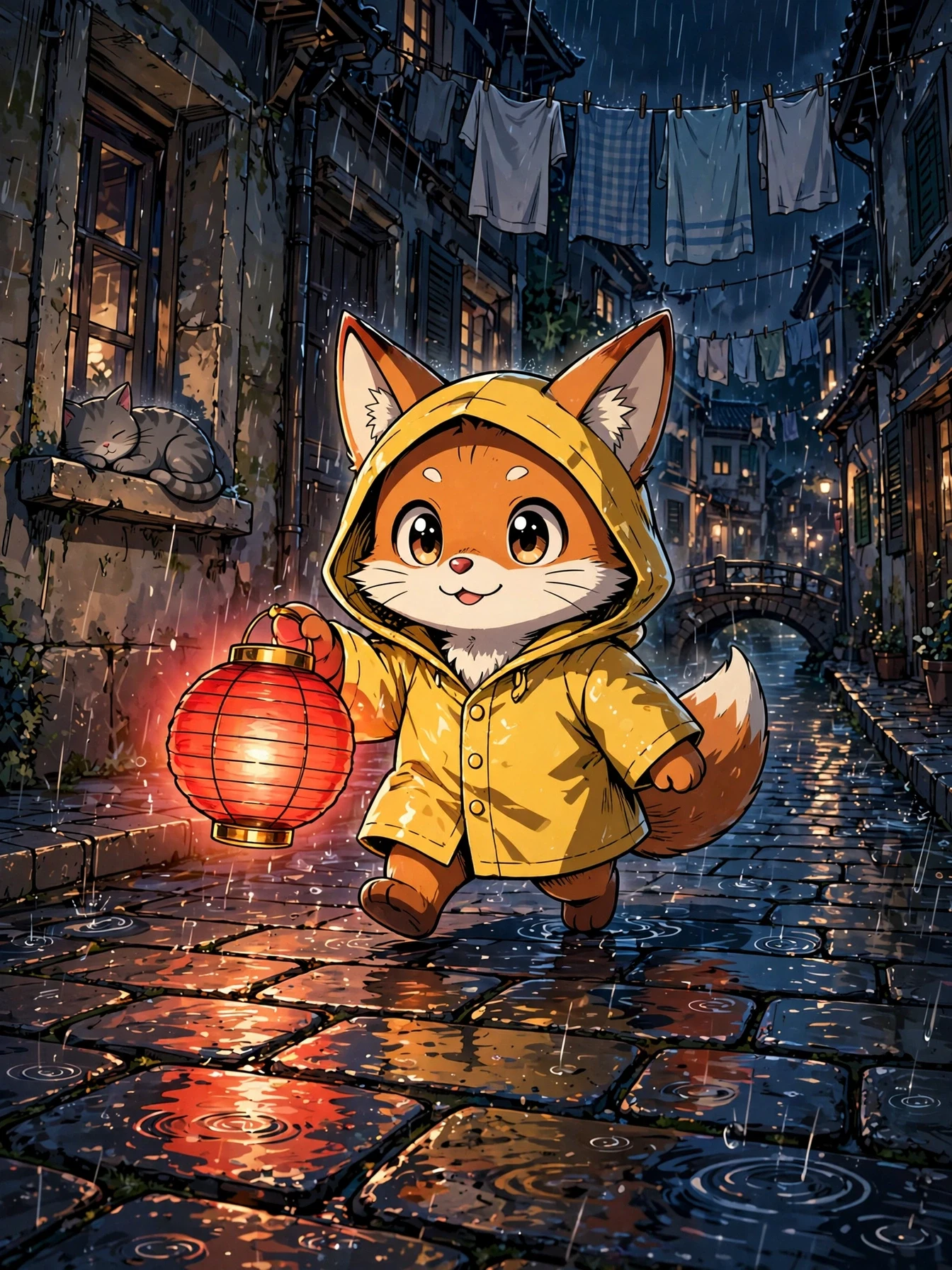
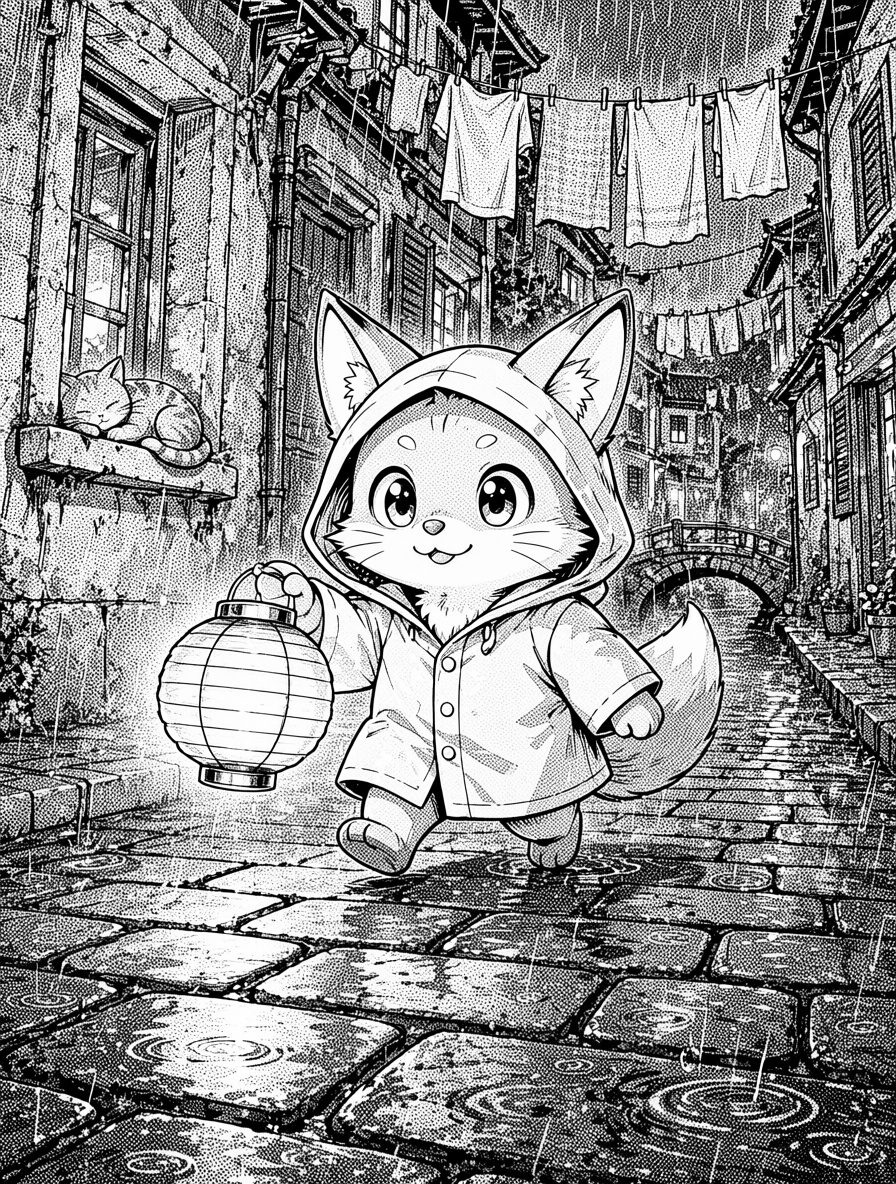
Muse paints a color anime-style panel: a cartoon fox in a yellow raincoat carries a red paper lantern down a rainy old-town street at night, with a cat asleep on a windowsill, laundry overhead and a small bridge behind. Qwen Image 2.1 Edit redraws it in one pass as a black-and-white manga panel. The composition, pose and every background element stay in place. Outlines come back as crisp ink, the night sky and shadows become solid blacks and dense dots, walls and cobblestones get screentone, and the lantern glow stays white paper. Flaws: the tones are dots the model drew, scattered rather than a true 45° halftone grid, so this is not the mechanical tone pass the ComfyUI-MangaScreen node does. The yellow coat and orange fur both go nearly white, so the fox loses its color contrast and reads a little like a cat. The panel comes back at 896×1184, smaller than the 1344×1792 color art. Swap the Muse node for a 📷 Image input to convert your own picture. Both outputs were checked and are SFW (a cartoon animal, no people). Inspired by the ComfyUI-MangaScreen node by @renrenrenz5cq (https://x.com/renrenrenz5cq/status/2110357826745098659) and @studiomasakaki's Qwen + MangaScreen recipe (https://x.com/studiomasakaki/status/2111473583835004974). No media from those posts is used.
Inputs and run details
Color art · prompt
A full-color anime-style comic illustration with clean cel shading and bold outlines: a small cartoon fox with orange fur and a white chest, wearing a yellow raincoat with the hood up, holds a glowing red paper lantern and walks along a narrow rainy old-town street at night. Wet cobblestones reflect warm lantern light, a cat sleeps on a windowsill, laundry hangs on a line overhead, a tiny bridge over a canal in the background, falling rain streaks. Strong light and shadow, dramatic low camera angle, full body, family-friendly, no text, no signs with letters, no speech bubbles.
Manga conversion · instruction
Redraw image 1 as a printed black-and-white manga panel. Keep the exact composition, camera angle, character pose and every background element in the same place. Ink: clean black line art with varied line weight, crisp outlines. Blacks: the darkest areas become solid black ink fills. Tones: every mid-tone becomes screentone, a pattern of round halftone dots; darker areas get bigger, denser dots and lighter areas get smaller, sparser dots. Highlights: the lantern glow and its reflections stay clean white paper. Rain: thin straight ink strokes. Pure black and white only: no color, no smooth grey gradients, no added text, no speech bubbles, no sound effects.
Open workflow ↗How it worksDownload workflowOriginal sampled graph
Day to night between two keyframes
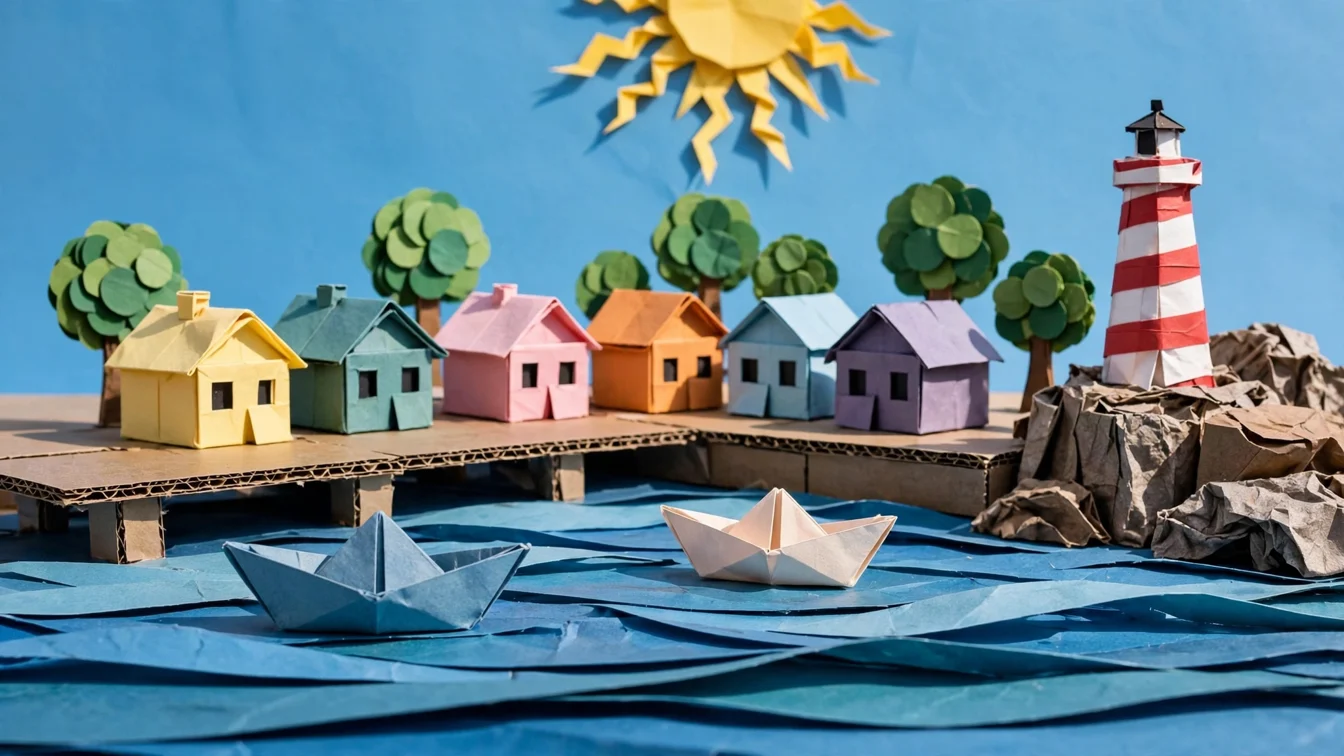
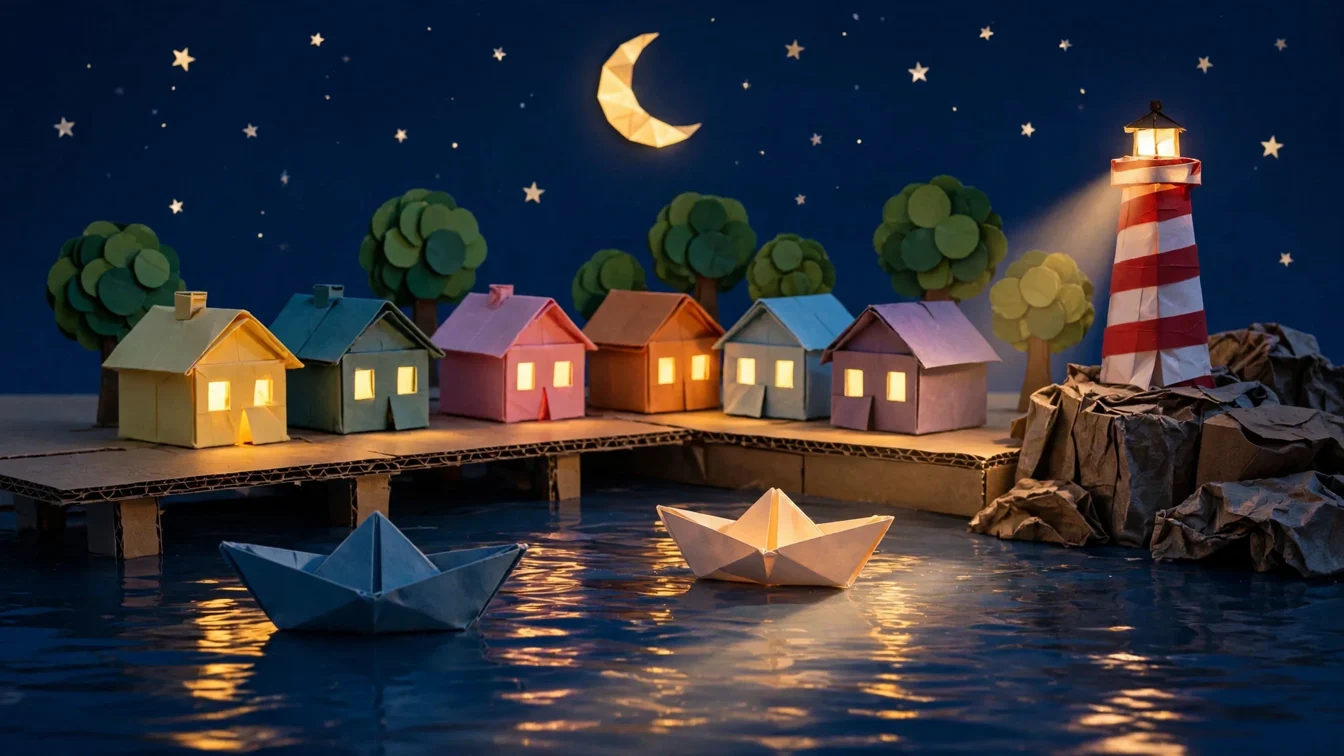
Muse paints a paper-craft seaside village at midday: six card houses, a striped lighthouse, two folded paper boats and a paper sun. Muse Edit repaints the same shot at night, with lit windows, the lighthouse lamp on, a paper crescent moon and stars. MiniMax H3 Max gets the day still on its image port and the night still on its end-frame port. Across 5 seconds the camera holds still while the sun sinks behind the trees, the sky goes from blue through orange and pink to navy, the windows light up and the lighthouse switches on. The clip ends on the night keyframe. It is the gallery's first start + end frame example. Flaws: the night keyframe turned the layered paper waves into glossy real-looking water, so the water changes material during the clip. The moon and stars appear only in the last second instead of fading in, and the lighthouse gives a soft glow, not a sweeping beam. The 480p setting was dropped by the headless runner (it sends resolution only when it has the model catalog), so the clip rendered at H3 Max's default 768p for $0.40. The saved graph says 768p to match. H3 Max also added a faint ambient sound bed. Swap either keyframe for a 📷 Image input to morph between your own before and after. Every keyframe and sampled video frame was checked and is SFW (paper scenery, no people). Inspired by @Audrius1454663's open-source rebuild of Higgsfield's VFX presets, Day→Night among them, on the Comfy Developer Platform (https://x.com/Audrius1454663/status/2111177673842012349). No media from that post is used.
Inputs and run details
Day keyframe · prompt
A handmade paper-craft miniature seaside village at bright midday, wide eye-level view from across the little harbor: six small houses made of folded colored card with dark empty windows, a red-and-white striped paper lighthouse on the rocks at the right with its lamp off, two folded paper boats on layered blue paper waves, a cardboard pier, round paper trees, a paper sun high in a clear blue sky. Crisp paper folds and visible card texture, soft tabletop-diorama light with short shadows, no people, no animals, no text.
Night keyframe · instruction
Repaint this exact scene at night. Keep the same camera, framing and every house, tree, boat, pier and the lighthouse in exactly the same place and shape, still made of paper and card. Change only the light: a deep navy night sky with small paper stars and a paper crescent moon in place of the sun, warm yellow light glowing in every house window, the lighthouse lamp switched on with a soft beam across the water, warm reflections on the paper waves. No people, no animals, no text.
Transition · motion prompt
Locked-off camera, a smooth tabletop timelapse from midday to night. The paper sun sinks behind the village, shadows stretch long across the card, the sky warms to orange and pink and then deepens to navy blue, the house windows light up one by one, the lighthouse lamp switches on and its beam sweeps over the water, the paper stars appear. The camera never moves and nothing new enters the scene. No people, no text.
Open workflow ↗How it worksDownload workflowOriginal sampled graph
Event details to a bilingual poster
GLM 5.3 Flash turns three lines of event details into a poster brief with every line to print in quotes: 秋茶会, Autumn Tea Festival, 10月24日–26日 10:00–18:00 / Oct 24–26, 10am–6pm, and 免费品茗 / Free Tastings. MOSS Image letters all of it at 1024×1536 with a negative prompt, character for character and where the brief puts it, with no extra words, over a line-art teapot and cup on textured paper. Flaws: the illustration is pale next to the lettering, the brief chose 秋茶会 rather than a longer headline, and MOSS is not fast (this run took about half a minute; test images took 19 to 78 seconds against 13 to 19 for Nano Banana 2.1). In side-by-side tests MOSS kept a two-column bilingual menu layout that Nano Banana 2.1, FLUX.3 and GPT Image 2 each rearranged. The poster was checked and is SFW (no people).
Vertical poster. Top headline: "秋茶会" then directly under it "Autumn Tea Festival". Directly under that: "10月24日–26日 10:00–18:00 / Oct 24–26, 10am–6pm". Bottom: "免费品茗 / Free Tastings". Central illustration: a simple ceramic teapot and cup with steam rising, a few maple leaves drifting beside them, drawn in thin elegant line art. Palette: warm terracotta, soft cream, muted persimmon, gentle sage green. Background: textured handmade paper with subtle fiber grain. Clean modern typography, generous margins, balanced vertical composition. No people, no logos, no other text.

Inputs and run details
Event details
A neighborhood tea house's autumn tea festival. October 24 to 26, 10am to 6pm. Free tastings. Warm, calm, a little traditional.
Open workflow ↗How it worksDownload workflowOriginal sampled graph
Product photo to a hero ad
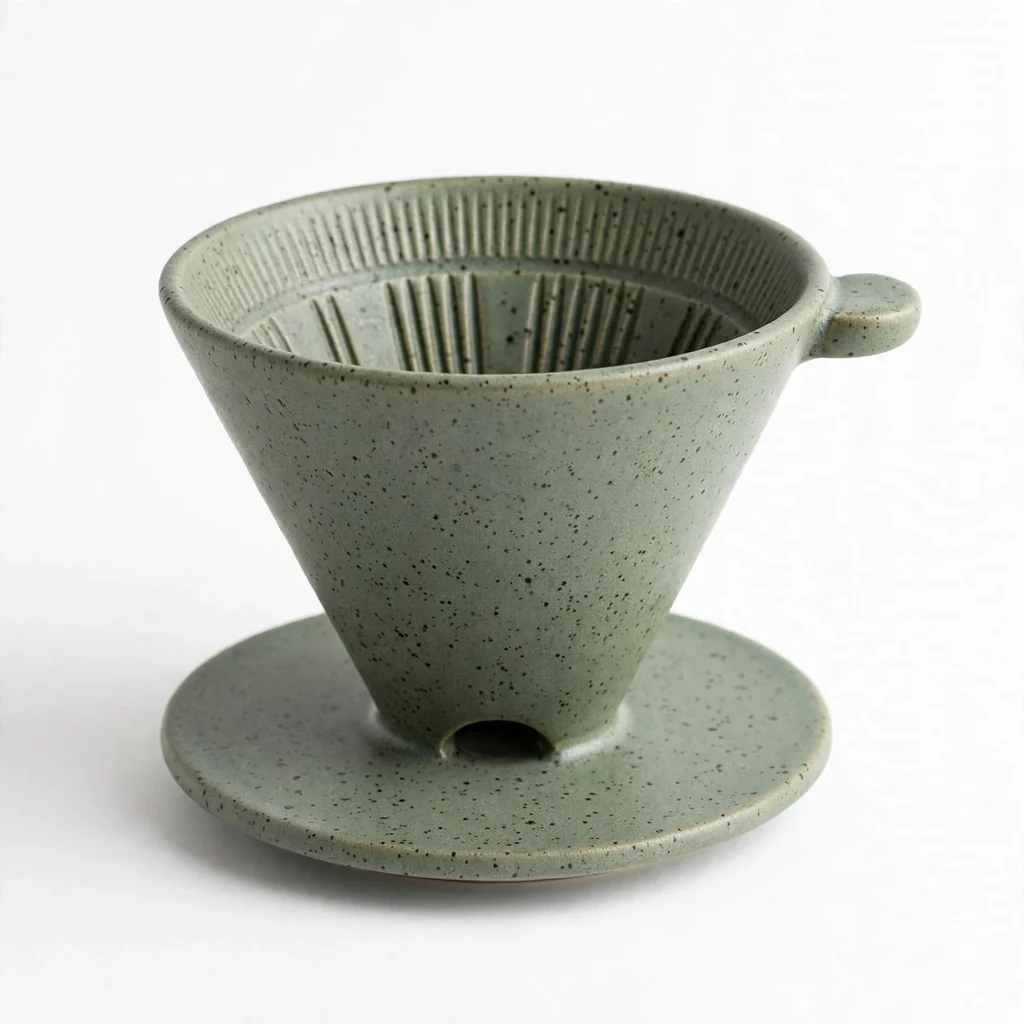
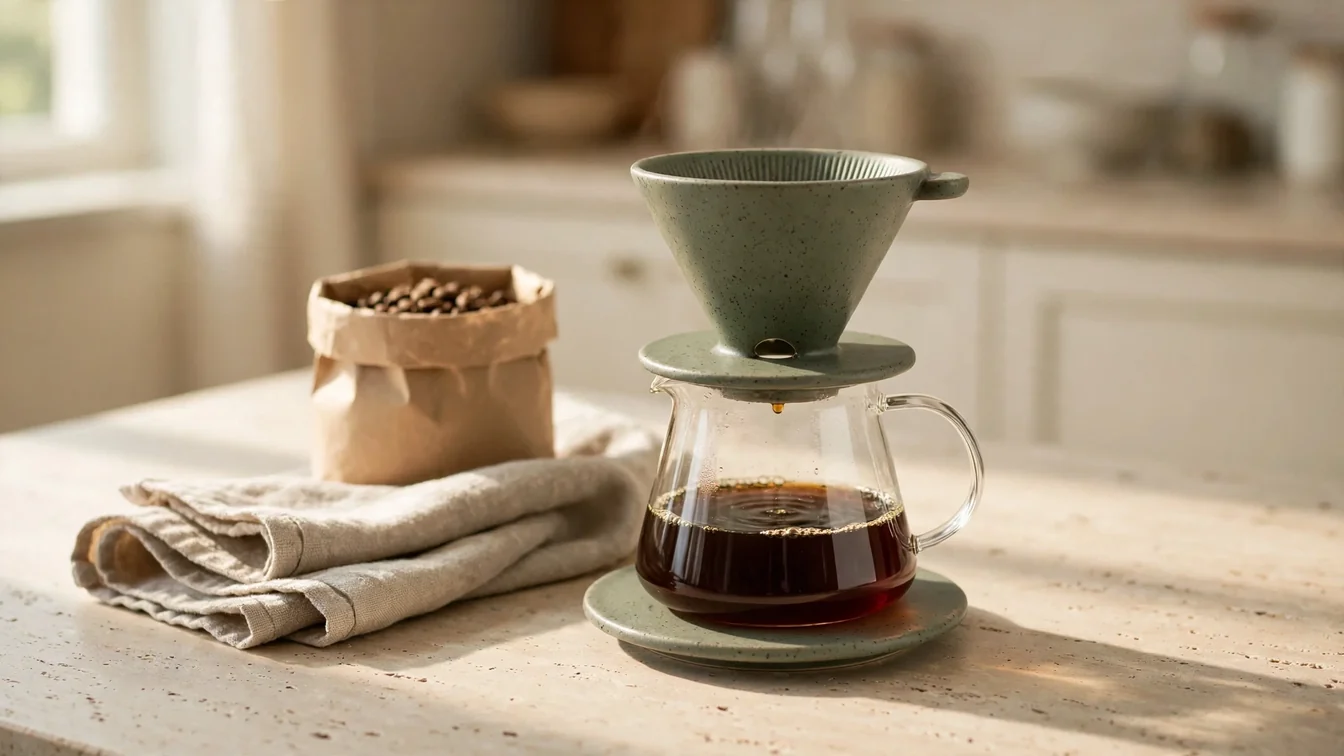
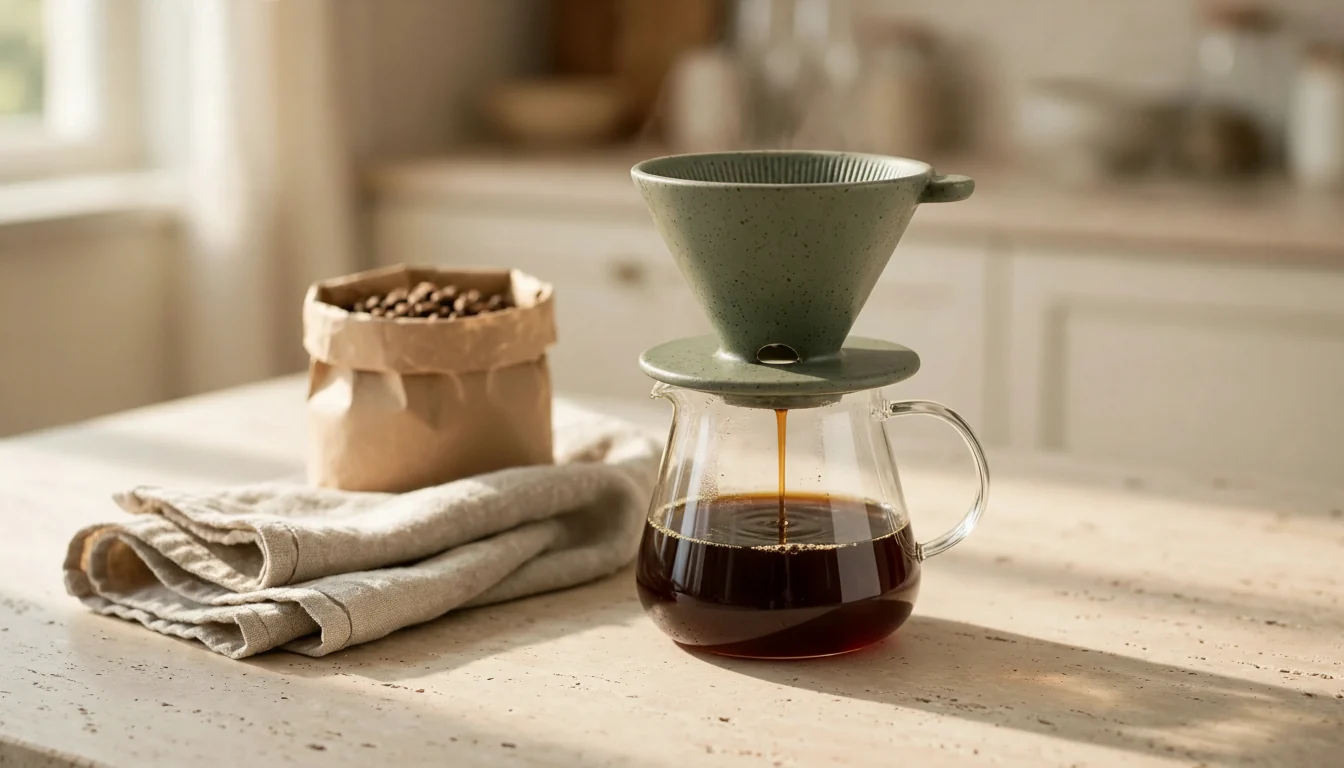
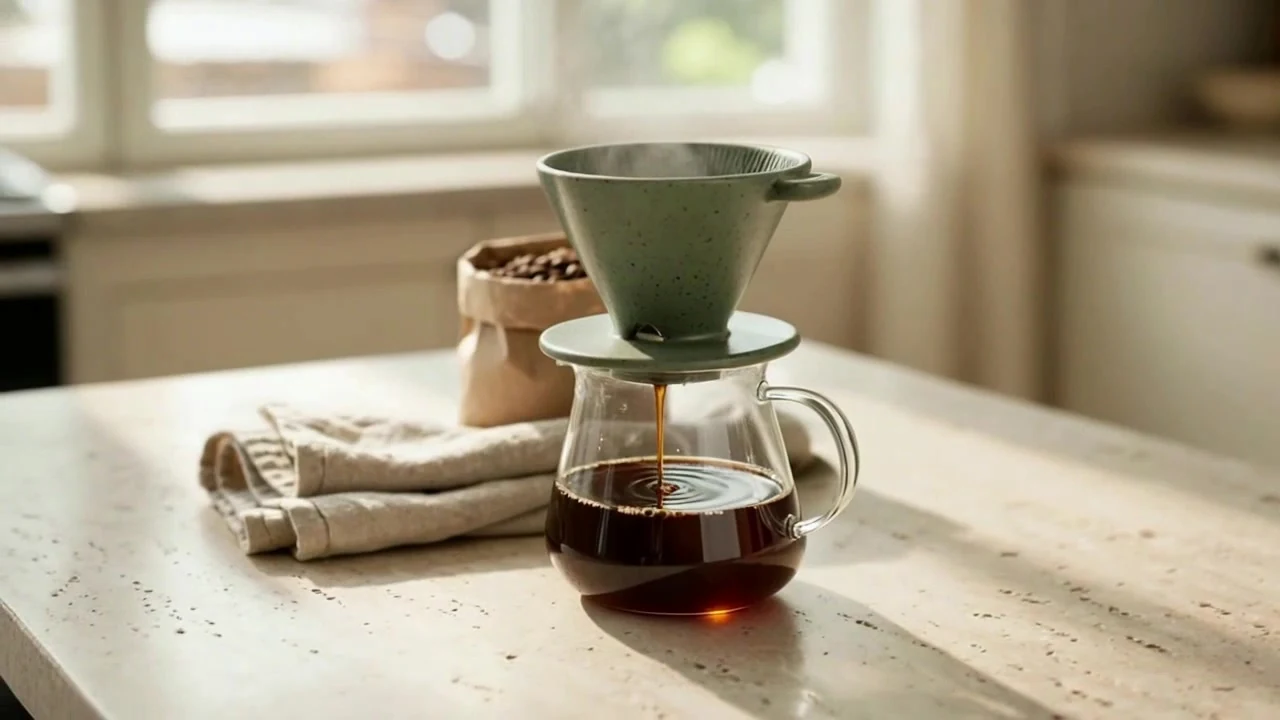
Muse paints a stand-in product packshot: a handmade sage-green speckled ceramic pour-over dripper with a ribbed inside, a thumb tab and a matching saucer, on white. Muse Edit places that exact dripper on a travertine kitchen counter, standing on a glass carafe of coffee next to a kraft bag of beans and a linen towel, in morning window light. The cone, glaze, speckles and tab come through. But the placement also invented a second sage saucer under the carafe, so the product shows up twice. The Inpaint node fixes only that: a brushed mask over the extra saucer, and Nano Banana Edit paints the carafe's glass bottom straight onto the stone. Seedance 1.5 Pro (720p, 5 s, no audio) then does one slow orbit: the camera arcs around the dripper, the bean bag slides behind it, the window drifts past, and it settles closer on the dripper over the carafe. Video → frames keeps that last frame as a hero still. Flaws: the placement turned the saucer into the dripper's base plate and then added the duplicate. Outside the mask the fix is close but not pixel-identical (mean change about 6/255): it also turned the single drip into a thin running stream and came back smaller (1344×768). Around 2 s a coffee drop falls into the dripper from above the frame, because the motion prompt asked for a falling drop and Seedance placed it wrong. The steam is heavier than a real pour-over. A retake with a reworded motion prompt was worse (an invisible pour from above and a smaller orbit), so the first take is the one shown. Swap the packshot Image node for a 📷 Image input to use your own product photo, then re-brush the mask on your scene. Every image and sampled video frame was checked and is SFW (a ceramic product in a kitchen, no people, no logos). Inspired by @Genflickmovies' "one product photo into a hero ad in three nodes" (https://x.com/Genflickmovies/status/2112318819133702620). No media from that post is used.
Inputs and run details
Product photo · prompt
Studio product packshot of a handmade ceramic pour-over coffee dripper: a cone-shaped dripper with a matte sage-green glaze, fine dark iron speckles, thin ribbed lines inside the rim, one small rounded thumb tab on the side, sitting on a matching round sage-green saucer. Centered on a plain white seamless background, soft even softbox light, a faint contact shadow, sharp focus, true-to-life color. No text, no logos, no labels, no people, no hands.
Placement · instruction
Place this exact coffee dripper into a lifestyle scene for a hero ad. Keep the product identical: the same cone shape, the same matte sage-green glaze and dark speckles, the same thumb tab and the same saucer, at the same proportions. Stand it slightly right of center on a pale travertine kitchen counter, with a clear glass carafe under it half full of coffee, a folded oatmeal linen towel and a small plain kraft paper bag of whole beans behind it on the left, soft warm morning window light from the left with long gentle shadows, a softly blurred cream-colored kitchen behind. Photographic, calm, premium. No text, no logos, no labels, no people, no hands.
Fix · what goes in the mask
The clear glass carafe's rounded glass bottom resting directly on the pale travertine counter, with a soft natural contact shadow and warm morning light on the stone. No saucer, no plate, no coaster under the carafe.
Hero move · look + motion
Look: a calm premium product commercial, warm morning window light, shallow depth of field, photographic, the same travertine counter and cream kitchen throughout. Motion: one slow, smooth orbit. The camera glides in a gentle 30-degree arc around the ceramic coffee dripper from left to right at counter height, easing slightly closer, and settles on a centered hero frame of the dripper on the glass carafe. A single drop of coffee falls from the dripper into the carafe and a thin wisp of steam rises. Nothing else moves. The dripper keeps its exact cone shape, matte sage-green glaze, dark speckles and thumb tab. No people, no hands, no text.
Open workflow ↗How it worksDownload workflowOriginal sampled graph
Three references, one clip
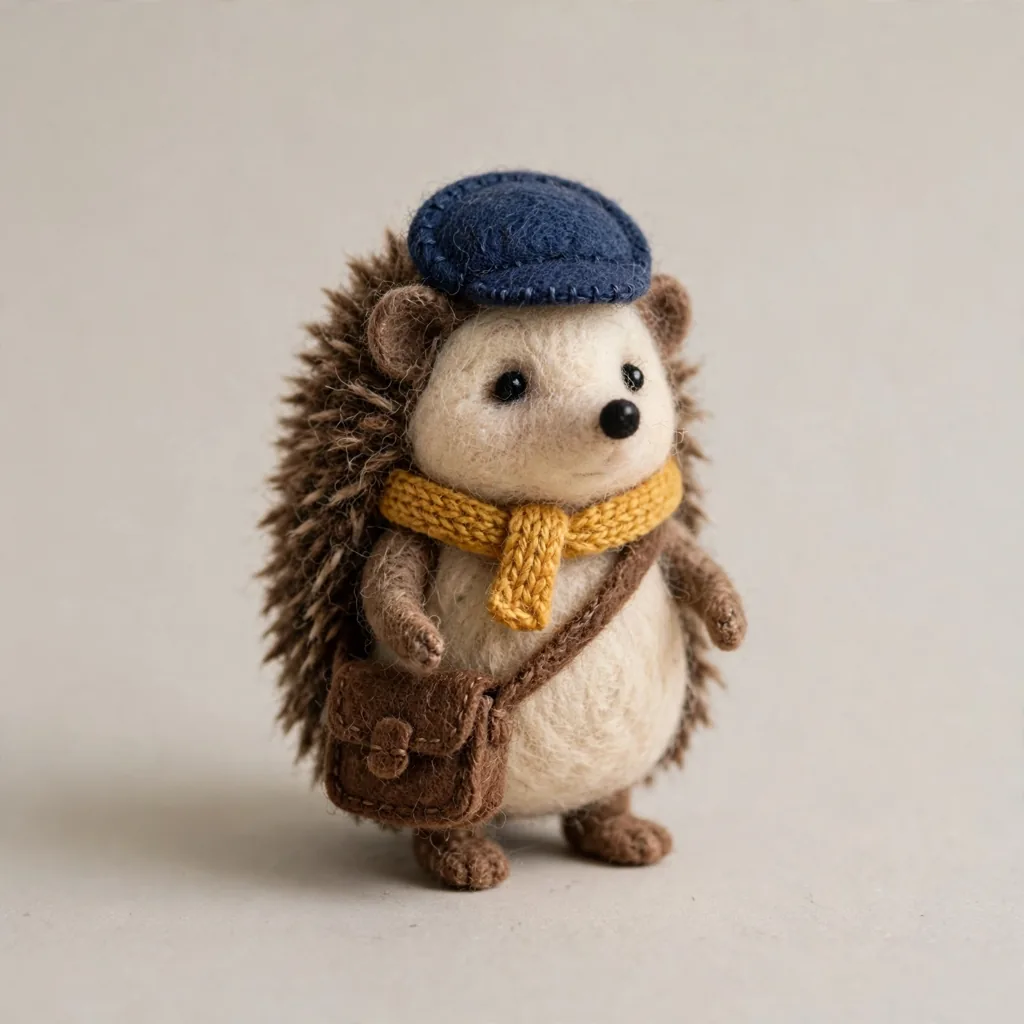
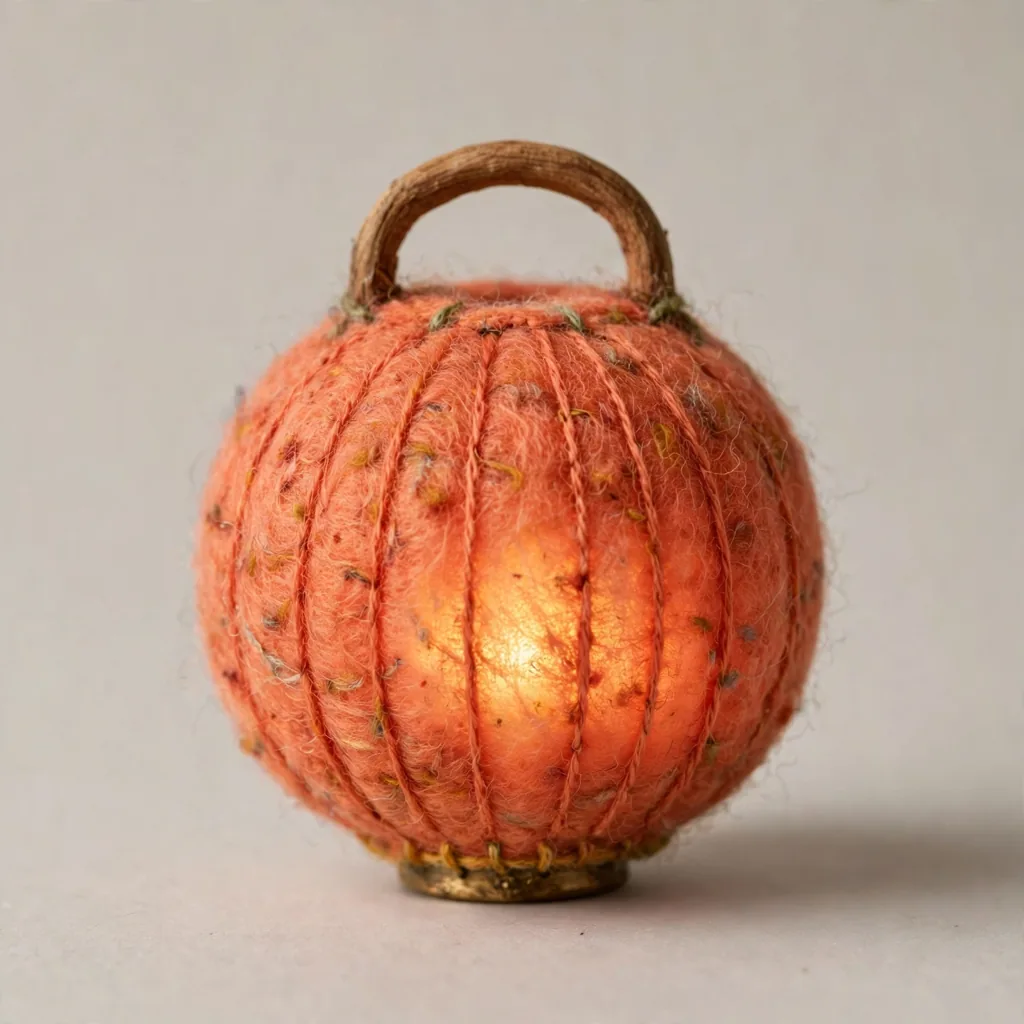
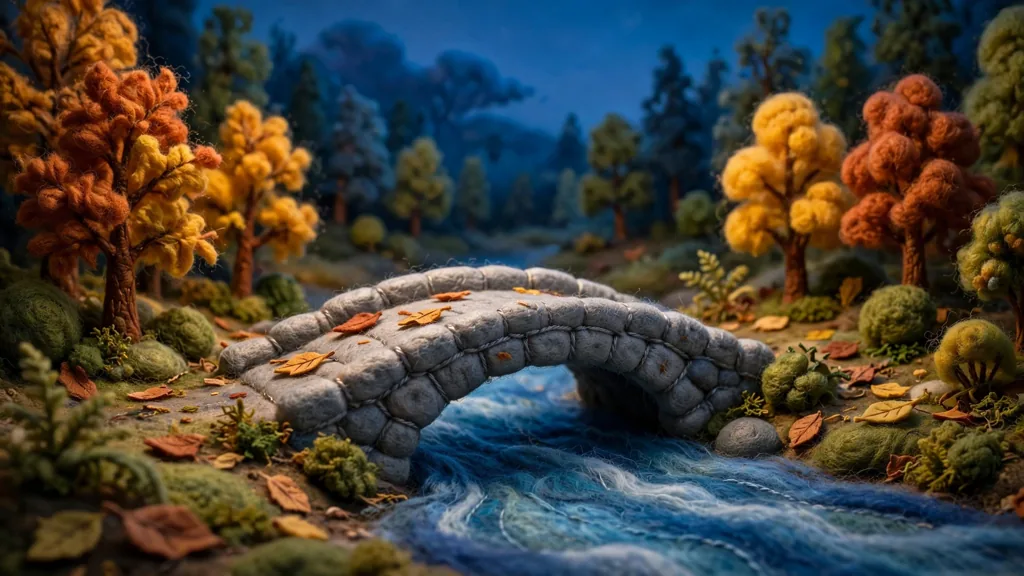
Muse paints three separate reference stills, all in one needle-felted wool stop-motion look: a little hedgehog mail carrier (brown felted spines, mustard knitted scarf, navy cap, brown satchel), a coral-orange ribbed paper lantern with a wooden handle, and an empty grey stone arch bridge over a blue wool stream in an autumn felt forest at dusk. All three go into one Text→Video node on its ref1, ref2 and ref3 ports, and MiniMax H3 Reference-to-Video (540p, 5 s) films one shot with them: the hedgehog walks onto the left end of the bridge carrying the unlit lantern by its handle while the camera tracks to the right past the felt trees, and at about 3.5 s the lantern lights up with a warm candle glow that he holds up. The character keeps its cap, scarf, satchel and face, the lantern keeps its shape, color and handle, and the bridge, stream and trees match the place still. This is the video version of Mix the references, which only makes a still. Flaws: the model ignored the framing in the prompt. Instead of crossing to the middle of the bridge, the hedgehog stays pinned to the left edge while the camera pans away, so he is cut off by the frame edge in the first half-second and again at the end. The glow lights the ground near him rather than the whole bridge, and the stream drifts out of frame as the camera pans. A retake with a locked-off-camera prompt panned the same way and kept him even smaller, so the first take is the one shown. The clip has its own generated sound (soft footsteps, then a rising tone as the lantern lights; no voice). Swap any Image node for a 📷 Image input to use your own references. Every still and sampled video frame was checked and is SFW (a felt cartoon hedgehog, a lantern and a forest; no people, no logos). Inspired by @ComfyUI's FastH3 OmniRef multi-reference video post (https://x.com/ComfyUI/status/2112645504769413283) and @OrctonAI's reference-character video tests (https://x.com/OrctonAI/status/2112955932216791381). No media from those posts is used.
Inputs and run details
Ref 1 · character
Look: a handmade needle-felted wool stop-motion miniature, soft fuzzy wool fibers, tiny visible stitches, warm tabletop studio light, muted autumn palette of rust, mustard and moss green. Character reference sheet: one small needle-felted hedgehog mail carrier standing upright, full body, front three-quarter view, brown felted spines, a cream face with a little black bead nose and bead eyes, a tiny mustard-yellow knitted scarf, a round navy-blue felt cap, a small brown felt satchel across the body. Centered on a plain light warm-grey backdrop, soft shadow, sharp focus. No text, no logos, no people, no hands.
Ref 2 · prop
Look: a handmade needle-felted wool stop-motion miniature, soft fuzzy wool fibers, tiny visible stitches, warm tabletop studio light, muted autumn palette of rust, mustard and moss green. Prop reference: one small round paper lantern in coral-orange with thin vertical ribs, a little curved wooden handle on top and a tiny brass base, glowing softly from a warm candle inside. Centered on a plain light warm-grey backdrop, soft shadow, sharp focus. Just the lantern, nothing else. No text, no logos, no people, no hands.
Ref 3 · place
Look: a handmade needle-felted wool stop-motion miniature, soft fuzzy wool fibers, tiny visible stitches, warm tabletop studio light, muted autumn palette of rust, mustard and moss green. Location reference: a miniature felted autumn forest at dusk, wide eye-level view of a small humpbacked grey stone arch bridge crossing a blue wool stream, rust and mustard felt trees on both banks, a few felt leaves on the bridge, a deep blue dusk sky. The bridge is empty: no characters, no animals, no people, no text.
Shot · look + action
Look: a handmade needle-felted wool stop-motion miniature, soft fuzzy wool fibers, tiny visible stitches, warm tabletop studio light, muted autumn palette of rust, mustard and moss green. One continuous shot, the camera tracks slowly sideways at eye level. The little hedgehog mail carrier from image 1 (brown felted spines, mustard knitted scarf, navy felt cap, brown satchel) walks onto the grey stone arch bridge from image 3, entering from the left, carrying the coral-orange paper lantern from image 2 by its curved wooden handle. In the middle of the bridge it stops, lifts the lantern up high, and the lantern's warm candle glow spreads over the stones, the fallen leaves and the blue wool stream below while the dusk sky deepens. Gentle stop-motion steps. Only this one hedgehog. No people, no hands, no text.
Open workflow ↗How it worksDownload workflowOriginal sampled graph